
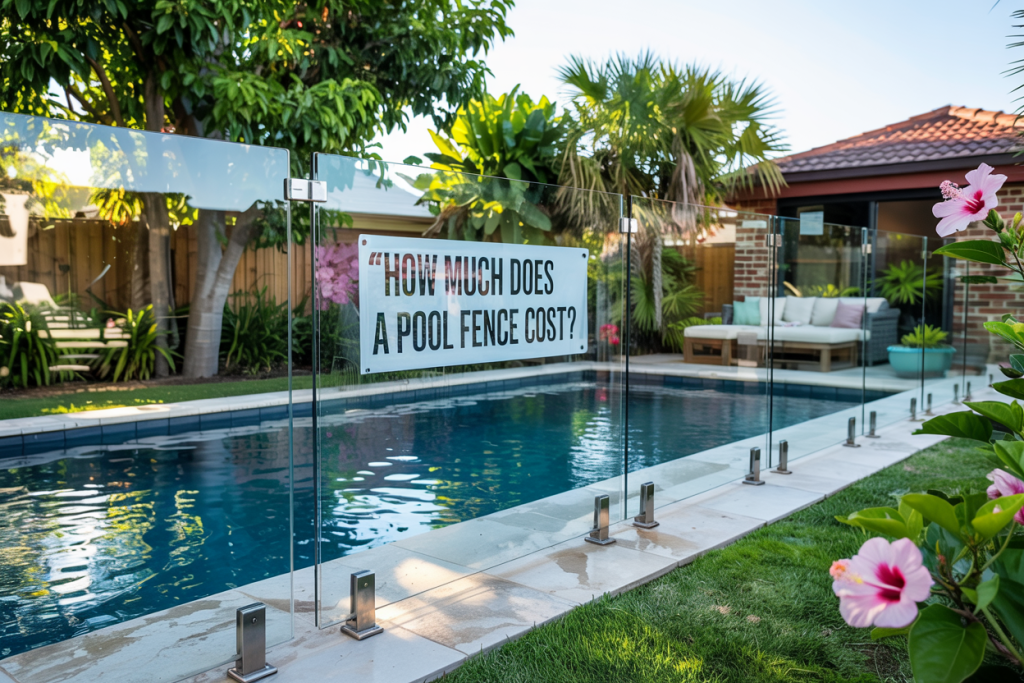
Installing a pool fence is a critical investment for Australian homeowners, combining legal compliance with family safety. As we progress through 2025, understanding the current pricing landscape has become essential for anyone planning to install or upgrade their swimming pool barriers. This comprehensive guide examines the latest pool fencing costs across Australia, exploring everything from budget-friendly aluminium options to premium frameless glass installations, while providing insights into factors that influence your total investment.
Pool fencing costs in Australia for 2025 range from approximately $180 to $600 per linear metre installed, depending on the material selected. For a typical residential pool requiring 20 metres of fencing, homeowners can expect to invest between $3,600 for basic aluminium fencing to $12,000 or more for premium frameless glass installations. These figures reflect not only rising material costs but also increased labour rates and evolving safety regulations that continue to shape the Australian pool fencing market.
Understanding Pool Fencing Costs in 2025
The Australian pool fencing market has experienced moderate price increases throughout 2024 and into 2025, driven by several interconnected factors. Supply chain adjustments following global disruptions have stabilized, but material costs remain elevated compared to pre-2023 levels. Labour rates have increased across all states, with skilled installers commanding premium prices particularly in metropolitan areas. Additionally, heightened awareness of pool safety and stricter enforcement of compliance standards have pushed homeowners toward higher-quality installations that meet or exceed regulatory requirements.
Current Price Ranges by Material Type
The cost per linear metre varies significantly based on your choice of fencing material. Aluminium pool fencing, representing the most economical compliant option, typically ranges from $180 to $300 per metre installed. This pricing reflects the material’s balance of affordability, durability, and low maintenance requirements. Mid-range semi-frameless glass fencing commands $300 to $430 per metre, offering enhanced aesthetics while maintaining cost-effectiveness. At the premium end, frameless glass pool fencing costs between $430 and $600 per metre, with some custom installations exceeding this range.
Timber or wood fencing occupies a middle ground at $200 to $350 per metre, though this material requires more intensive ongoing maintenance and typically offers a shorter lifespan of 8-12 years compared to metal or glass alternatives. Steel and wrought iron options range from $250 to $450 per metre, with premium galvanized or powder-coated versions commanding higher prices but offering exceptional durability. Budget-conscious homeowners can consider mesh or PVC fencing at $75 to $150 per metre, though these materials lack the premium appearance and longevity of other options.
Comparison of pool fencing costs per linear metre across different materials in Australia for 2025
Regional Cost Variations Across Australia
Geographic location significantly impacts pool fencing costs throughout Australia. Metropolitan areas in Sydney and Melbourne consistently command 10-20% premium pricing above national averages, reflecting higher labour costs, increased demand, and elevated operational expenses for contractors. Brisbane and the broader Queensland market tend to offer more competitive pricing, with costs aligning closely with national averages due to the high concentration of pool installations and resulting market competition.
Perth, Adelaide, and their surrounding regions generally track national average pricing, though specific suburbs near the coast may experience slight premiums due to the need for corrosion-resistant materials and specialized installations. Tasmania represents a unique market where transportation costs for materials can elevate prices, particularly for specialized products like frameless glass panels. Remote and regional areas across all states typically incur 25-30% surcharges above standard rates, reflecting travel costs, limited local competition, and logistical challenges.
The True Cost: Beyond Base Pricing
Understanding the complete financial picture requires looking beyond the per-metre cost of fencing panels. A standard residential pool typically requires 15-25 metres of fencing to create a compliant safety barrier, meaning a homeowner selecting mid-range frameless glass fencing at $500 per metre faces a base material and installation cost of $7,500 to $12,500 before accounting for gates, site preparation, or additional compliance requirements.
Comprehensive Breakdown of Pool Fencing Materials
Selecting the appropriate fencing material represents one of the most consequential decisions in your pool safety project. Each material offers distinct advantages, aesthetic qualities, and cost implications that extend beyond the initial installation.
Aluminium Pool Fencing: The Practical Choice
Aluminium fencing has established itself as Australia’s most popular pool fencing material, offering an exceptional balance of affordability, compliance, and longevity. The material’s natural resistance to corrosion makes it particularly suitable for coastal properties and saltwater pool environments, where other metals would rapidly deteriorate. Modern powder-coating technologies provide durable finishes in various colours, with black aluminium emerging as a particularly fashionable choice in 2025.
The installed cost of $180 to $300 per linear metre makes aluminium accessible to most budgets while maintaining strict compliance with Australian Standard AS1926.1-2012. A typical 20-metre installation might cost $3,600 to $6,000, representing significant savings compared to glass alternatives. The material requires minimal maintenance—typically limited to occasional hosing to remove dirt and debris—and offers an expected lifespan exceeding 15 years under normal conditions.
However, aluminium’s primary limitation lies in its reduced visual transparency compared to glass options. While this provides enhanced privacy, it diminishes supervision capabilities and interrupts sightlines to the pool area. For homeowners prioritizing budget considerations and low maintenance over aesthetic concerns, aluminium represents an outstanding value proposition.
Glass Pool Fencing: Premium Aesthetics and Transparency
Glass fencing has surged in popularity throughout Australian suburbs, prized for its ability to provide compliant safety barriers while maintaining unobstructed views of pool areas and surrounding landscapes. The material divides into two primary categories—semi-frameless and frameless—each offering distinct characteristics and cost structures.
Semi-Frameless Glass Fencing incorporates aluminium posts between glass panels, typically using 8-10mm toughened safety glass. This design provides structural support while reducing costs compared to fully frameless systems. Current 2025 pricing ranges from $300 to $430 per linear metre installed. For a standard 20-metre installation, homeowners can expect total costs between $6,000 and $8,600. The aluminium posts, available in various powder-coated colours, can be matched to existing architectural features or chosen to complement outdoor colour schemes.
Frameless Glass Fencing represents the pinnacle of pool barrier aesthetics, utilizing thicker 12mm toughened glass panels mounted on specialized spigots or channel systems without vertical interruption. This creates a “barely there” appearance that maximizes visual flow and enhances property presentation. The premium positioning is reflected in pricing of $430 to $600 per metre installed, with custom installations potentially exceeding $800 per metre for oversized panels or complex configurations. A 20-metre frameless installation typically costs $8,600 to $12,000, representing a $5,000 to $6,000 premium over semi-frameless alternatives.
The investment in glass fencing extends beyond immediate costs. Research indicates that high-quality glass pool fencing can increase property values by 7-15%, with real estate professionals estimating that 70-80% of installation costs may be recovered through enhanced property valuation. The material’s resistance to corrosion, minimal maintenance requirements (primarily limited to periodic cleaning with water and a squeegee), and 15+ year lifespan contribute to its strong return on investment profile.
Timber and Steel: Traditional Alternatives
Timber fencing continues to appeal to homeowners seeking natural aesthetics that complement traditional Australian backyard designs. Treated pine options start around $200 per metre, while premium hardwood selections can reach $350 per metre. However, timber’s susceptibility to rotting, insect damage, and weathering necessitates regular maintenance including sealing, staining, and painting, with expected lifespans of 8-12 years before significant deterioration occurs.
Steel and wrought iron fencing offers exceptional strength and security, with pricing ranging from $250 to $450 per metre depending on design complexity and protective coatings. Premium hot-dip galvanized or powder-coated steel systems provide superior longevity, though coastal environments require careful material selection to prevent corrosion. While steel’s strength is advantageous, its greater weight increases both shipping and installation costs compared to aluminium alternatives.
Hidden Costs and Additional Expenses
The per-metre cost of fencing represents only one component of the total investment required for a compliant pool barrier. Understanding and budgeting for ancillary expenses prevents mid-project financial surprises and ensures realistic planning.
Pool Gates and Essential Hardware
Pool gates represent critical safety components with distinct cost considerations separate from linear fencing calculations. A standard aluminium pool gate typically costs $250 to $400 including basic hardware. Glass pool gates command significantly higher prices, ranging from $600 to $1,200 depending on dimensions, glass thickness, and hardware specifications.
Mandatory self-closing mechanisms add $100 to $200 to gate costs, with premium hydraulic closers offering superior performance and longevity at the higher end of this range. Child-resistant latches, another non-negotiable safety requirement under Australian standards, range from $50 for basic mechanical models to $250 for advanced magnetic or digital locking systems. For frameless glass installations, specialized hinges and mounting hardware can add $150 to $300 to gate expenses.
These components must meet rigorous performance standards, including reliable self-closing from any position and child-resistant latching placed at minimum heights of 1,500mm above ground level. The gate must open outward from the pool area and achieve secure latching that cannot be forced, shaken, or jolted open. Given gates represent potential weak points in pool barriers from both safety and compliance perspectives, investment in quality hardware proves essential.
Site Preparation and Removal Costs
Existing fence removal typically costs $20 to $40 per linear metre, with complexity increasing for concrete-set posts requiring excavation. A 20-metre existing fence might therefore incur $400 to $800 in removal costs before new installation can commence. Waste disposal fees for removed materials add $200 to $500 depending on volume and local disposal charges.
Ground preparation represents another frequently underestimated expense. Properties requiring substantial leveling or excavation typically incur costs of $100 to $150 per hour for earthmoving equipment and operators. Rocky ground that complicates post-hole drilling may attract surcharges of $10 to $20 per hole from fencing contractors. For glass pool fencing requiring stable foundations, concrete pad preparation for spigot mounting typically costs $80 to $120 per linear metre and represents an essential foundation investment.
Landscaping adjustments necessitated by fence installation—including plant relocation, irrigation modifications, or pathway alterations—constitute commonly unanticipated expenses that can add hundreds to thousands of dollars to project totals. When obtaining quotations, homeowners should explicitly discuss site conditions and preparation requirements with potential contractors to ensure comprehensive cost estimates.
Labour and Installation Costs
Professional installation labour represents a substantial portion of total pool fencing investment. Across metropolitan Australia in 2025, skilled installers typically charge $65 to $120 per hour, with regional areas sometimes offering more competitive rates of $50 to $80 per hour. Installation complexity dramatically impacts labour hours—straightforward installations on level, accessible ground might require just 1-2 hours per linear metre, while challenging sites with difficult access, rocky substrates, or specialized mounting requirements can double or triple this timeframe.
Frameless glass installation commands premium labour rates, often 30-50% higher than standard aluminium fence installation due to the specialized expertise required for proper alignment and secure mounting of heavy glass panels. Most contractors charge minimum service fees of $250 to $500 regardless of project size, disproportionately affecting small jobs. Remote locations or properties with difficult access may incur additional travel surcharges.
Compliance and Inspection Costs
Pool barrier compliance inspections represent mandatory expenses in most Australian jurisdictions. Inspection costs range from $175 to $360 depending on pool complexity, location, and inspector chosen. Many states require inspections every 3-4 years for existing pools, upon completion of new installations, and prior to property sales or leases.
The pool compliance certificate itself costs $23 to $44 as a government administration fee, separate from inspection charges. If initial inspections reveal non-compliance, re-inspection fees of $79 to $180 apply once rectification work is completed. Some councils charge additional registration fees of approximately $79 per safety barrier. For properties changing ownership, these inspection and certification costs become unavoidable prerequisites for settlement.
CPR signage, required to be prominently displayed within the pool area and legible from 3 metres distance, costs $25 to $35. While seemingly minor, this represents another line item in the comprehensive cost picture.
Understanding Australian Pool Fencing Regulations
Compliance with Australian pool safety standards represents a non-negotiable aspect of pool ownership, directly impacting both installation costs and ongoing obligations. The regulatory framework exists primarily to prevent child drownings, which tragically claim young lives each year despite being largely preventable.
The Australian Standard AS1926.1-2012
The Australian Standard AS1926.1-2012 serves as the primary reference document for swimming pool safety barriers across most of Australia, though some jurisdictions maintain variations or earlier standard versions. This standard specifies comprehensive requirements for fence height, non-climbable zones, gate functionality, and structural integrity designed to restrict access by unsupervised children under five years of age.
Pool fences must maintain a minimum height of 1,200mm as measured from finished ground level, with no gaps exceeding 100mm at the fence bottom. Where boundary fences form part of pool barriers, the requirement increases to 1,800mm height. Vertical spacing between fence elements must not exceed 100mm if horizontal rails are spaced 900mm or more apart; if horizontal rails are closer than 900mm, vertical spacing must reduce to maximum 10mm.
Non-Climbable Zone Requirements
The non-climbable zone (NCZ) represents one of the most frequently misunderstood yet critical compliance elements. This zone, measured as a 900mm arc from the top of the fence extending toward the ground, must remain free of any objects that could assist a child in climbing over the barrier. Trees, shrubs, barbecues, pot plants, toys, ladders, chairs, and similar items cannot be positioned within this 900mm arc on the exterior side of the fence.
Inside the pool area, a 300mm zone extending from the fence must also remain clear of potential footholds or handholds. These requirements necessitate ongoing vigilance from pool owners, as seasonal plant growth or the temporary placement of outdoor furniture can inadvertently create non-compliance situations.
Gate Performance Standards
Pool gates face the most rigorous performance requirements of any pool barrier component. Gates must open outward away from the pool area, preventing children from gaining immediate water access even if they manipulate the latch. The self-closing mechanism must function reliably from any open position—whether the gate is opened a few millimetres or swung fully open—ensuring automatic closure and latching without human intervention.
The self-latching mechanism must secure the gate even when subjected to forceful shaking or downward pressure. Latch release mechanisms must be positioned at minimum 1,500mm above ground level, placing them beyond the reach of young children. These requirements reflect the reality that gates represent the most common failure point in pool safety systems, with faulty latches or hinges being the primary reason pools fail compliance inspections.
Doors, Windows, and Building-as-Barrier
Modern pool safety standards no longer permit doors or windows to serve as primary pool barriers for newly constructed pools. All pools must be separated from residential buildings by dedicated fencing structures. However, older pools constructed before specific cutoff dates (varying by state) may retain building-as-barrier configurations provided they meet grandfathered requirements.
Where doors provide access to pool areas in older installations, they must be self-closing and fitted with childproof locks or alarms that activate when doors open. Windows opening to pool areas cannot open more than 100mm (125mm in Victoria) or must incorporate screens and locking devices preventing wider opening. These restrictions reflect the vulnerability of building access points as potential unsupervised entry routes to pool areas.
Maximizing Value: ROI and Long-Term Considerations
Pool fencing represents a significant financial commitment that warrants careful consideration of long-term value beyond initial installation costs. Several factors influence the return on investment and ongoing cost-effectiveness of different fencing options.
Property Value Enhancement
High-quality pool fencing demonstrably increases property values, with the magnitude of enhancement varying by fence type, property location, and overall presentation. Glass pool fencing, particularly frameless installations, has been shown to increase property values by 7-15% according to real estate industry analyses. On a $600,000 property, this translates to potential value increases of $42,000 to $90,000—significantly exceeding the $8,000 to $12,000 investment in premium frameless glass installation.
Real estate professionals consistently identify quality pool fencing as a high-value addition that enhances property presentation, appeals to safety-conscious families, and contributes to competitive positioning in local markets. Properties featuring premium glass fencing typically sell faster and command higher prices than comparable properties with basic aluminium or aged fencing systems. While aluminium fencing provides adequate safety compliance, it generally contributes less to property value enhancement than glass alternatives.
Maintenance Cost Considerations
Long-term maintenance costs significantly impact the true lifetime expense of pool fencing. Glass fencing requires minimal maintenance, primarily limited to periodic cleaning with water and a squeegee to maintain transparency—a task typically requiring 20-30 minutes monthly. Professional glass cleaning services, if desired, cost $100 to $300 depending on fence dimensions.
Aluminium fencing similarly offers low-maintenance benefits, requiring only occasional hosing to remove accumulated dirt and salt deposits. Coastal installations benefit from more frequent rinsing to prevent salt buildup, but no specialized treatments or recoating are typically necessary during the fence’s 15+ year lifespan. Powder-coated finishes resist fading, chipping, and corrosion when properly maintained.
Timber fencing presents a starkly different maintenance profile, requiring regular sealing, staining, or painting every 2-3 years to prevent weather damage and deterioration. These recurring maintenance cycles can add $500 to $1,000 or more to lifetime costs, in addition to the reduced lifespan of 8-12 years before significant replacement becomes necessary. Steel fencing, while durable, requires vigilant rust prevention and treatment, particularly in coastal or saltwater pool environments.
Durability and Lifespan Analysis
Expected lifespan directly influences cost-effectiveness calculations. Properly installed frameless glass pool fencing typically lasts 15+ years with minimal maintenance, offering similar longevity to premium aluminium systems. The tempered safety glass used in modern installations resists impact, weathering, and chemical exposure from pool chlorine or salt systems.
Aluminium fencing offers comparable 15+ year lifespans, with many installations remaining functional and attractive for 20+ years when properly maintained. The material’s natural corrosion resistance ensures reliable performance without the degradation common to untreated metals. Marine-grade aluminium specifications provide enhanced protection for coastal properties where salt exposure accelerates corrosion of lesser materials.
Timber’s 8-12 year typical lifespan means homeowners face replacement costs approximately twice during the period a single glass or aluminium installation remains serviceable. When factoring in both initial installation and subsequent replacement, timber’s apparent cost advantage diminishes considerably over extended timeframes.
Coastal and Saltwater Pool Considerations
Properties near the coast or featuring saltwater pools require particular attention to material selection and corrosion prevention. Salt exposure—whether from ocean spray, salt-laden air, or saltwater pool systems—dramatically accelerates corrosion of incompatible materials.
For metal fencing in coastal environments, marine-grade stainless steel (Type 316 or 2205 duplex) provides superior corrosion resistance compared to standard grades. Aluminium fencing naturally resists saltwater corrosion better than steel alternatives, making it particularly suitable for coastal and saltwater pool applications without requiring special treatments. Regular rinsing with fresh water removes salt deposits and significantly extends fence lifespan in these challenging environments.
Glass fencing excels in coastal applications, with the glass panels themselves immune to salt corrosion. However, metal spigots and mounting hardware require careful specification—marine-grade stainless steel spigots resist corrosion far better than standard grades, though even premium materials benefit from periodic rinsing and inspection. Homeowners should explicitly confirm marine-grade specifications when obtaining quotations for coastal glass fence installations.
DIY Installation vs. Professional Services
The decision between DIY installation and professional services significantly impacts both immediate costs and long-term outcomes. While DIY approaches offer potential savings, they introduce risks that may ultimately prove more costly than professional installation.
DIY Installation: Costs and Considerations
DIY pool fence installation can reduce labour costs by $1,300 to $2,000 for a typical 20-metre installation. Materials-only pricing for aluminium fencing panels ranges from $90 to $200 per linear metre, while glass panels cost $200 to $350 per metre without installation. Additional expenses include posts, gates, hardware, concrete for footings, and potentially tool rental or purchase.
However, DIY installation presents substantial challenges beyond simple cost calculations. Pool fencing must meet precise specifications under Australian standards, with even minor deviations potentially resulting in failed compliance inspections. Incorrect fence height, improper gate installation, inadequate non-climbable zone establishment, or structural deficiencies can necessitate costly rectification work that eliminates any labour savings.
Glass fencing installation proves particularly unsuitable for DIY approaches due to the specialized techniques required for handling heavy glass panels, achieving proper alignment, and ensuring secure mounting that will withstand structural testing. Most experts strongly discourage DIY glass fence installation except for homeowners with relevant professional experience.
Professional Installation Benefits
Professional installers bring comprehensive expertise in material selection, site assessment, compliance requirements, and proper installation techniques. Experienced contractors identify potential compliance issues during planning stages, preventing costly mid-project modifications. They understand local council requirements, can navigate permit processes, and guarantee installations that pass compliance inspections on first assessment.
Professional installation includes warranties covering both materials and workmanship, typically ranging from 1 to 10 years depending on materials and contractors. This protection provides recourse if defects or failures emerge, contrasting with DIY installations where homeowners bear all risk. The time savings also prove significant—professional teams typically complete installations in days, while DIY projects may extend over weeks.
Insurance considerations favour professional installation, particularly for glass fencing. Accidents during DIY installation may not be covered by standard homeowner insurance policies, potentially exposing owners to significant financial liability. Professional installers carry appropriate insurance protecting against installation accidents and property damage.
Emerging Trends in Pool Fencing for 2025
The Australian pool fencing market continues evolving with new designs, materials, and technologies that influence both aesthetics and costs.
Smart Pool Gate Technology
Technology integration represents one of the most notable 2025 trends, with smart pool gates incorporating enhanced monitoring and access control capabilities. These systems include keypad entry, smartphone-based locks, and automatic notifications when gates are opened or left unsecured. While adding $200 to $500 to standard gate costs, smart features provide enhanced security and peace of mind, particularly for families with young children.
Black Aluminium and Custom Finishes
Design trends favour bold, contemporary aesthetics with matte black aluminium fencing experiencing surging popularity throughout 2025. This on-trend colour complements modern architectural styles while maintaining the practical benefits and affordability of aluminium materials. Custom powder-coating in specialized colours adds 15-25% to standard aluminium costs but enables precise matching to existing design elements.
Mixed Materials and Custom Screens
Homeowners increasingly treat pool fencing as design features rather than purely functional barriers. Mixed material combinations—such as stone pillars with glass panels, or metal frames with timber inserts—create personalized appearances that elevate outdoor spaces. Laser-cut aluminium screens with custom patterns provide privacy while maintaining airflow, appealing to urban properties where neighbours are proximate.
Sustainability Focus
Eco-conscious homeowners increasingly prioritize sustainable materials and responsible sourcing. Recycled aluminium, responsibly harvested timber, and environmentally friendly powder coating processes appeal to this growing market segment. While sustainable options may command slight premiums, they align with broader environmental values without compromising functionality or compliance.
Conclusion: Making Informed Pool Fencing Decisions
Pool fencing represents a significant investment that combines safety, compliance, aesthetics, and property value considerations. Current 2025 pricing ranges from $180 per metre for budget-conscious aluminium installations to $600+ per metre for premium frameless glass systems, with typical residential projects totaling $3,600 to $12,000 or more depending on materials, site conditions, and additional requirements.
Beyond immediate costs, successful pool fencing decisions account for long-term factors including maintenance requirements, expected lifespan, property value enhancement, and compliance certainty. Glass fencing, despite higher upfront costs, delivers strong ROI through minimal maintenance, extended lifespan, and substantial property value increases. Aluminium provides excellent value for budget-conscious homeowners, balancing affordability with durability and compliance.
Professional installation ensures compliance, provides warranty protection, and prevents costly rectification of DIY errors. The peace of mind from knowing your pool barrier meets all safety standards and will protect your family proves invaluable regardless of material selection.
When obtaining quotations, ensure comprehensive discussions of site preparation, gate hardware, compliance inspection costs, and warranty terms. Compare quotes on an apples-to-apples basis, verifying that all necessary components and services are included. Select reputable contractors with demonstrated experience in pool fencing installation and thorough understanding of local compliance requirements.
Ultimately, pool fencing protects what matters most—the safety of your family and guests. While costs warrant careful consideration, the investment in quality materials, professional installation, and compliant design provides returns measured not just in dollars but in lives safeguarded and peace of mind assured.
Recent Posts
Safety around swimming pools and spas remains a critical priority across Australia, with strict pool fencing laws designed to prevent tragic drowning incidents, especially among young children. As we...
Building steps on a sloped yard can provide a safe, attractive way to connect different elevations on your property. With proper planning and construction techniques, you can create sturdy,...