
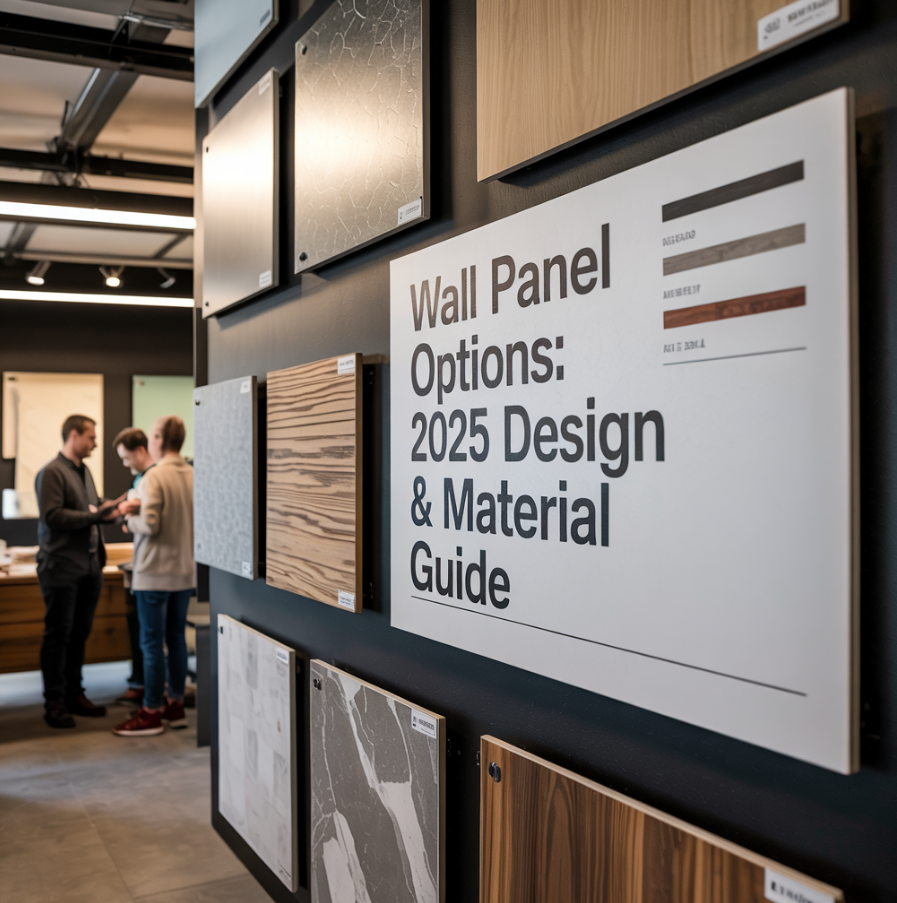
Wall panels offer a versatile solution for enhancing aesthetics, durability, and functionality in both residential and commercial spaces. This guide explores modern materials, costs, and installation methods to help you choose the best option for your project.
Why Choose Wall Panels?
- Aesthetic Appeal: Transform plain walls with textures, colors, and patterns.
- Durability: Resistant to moisture, pests, and wear compared to drywall or paint.
- Low Maintenance: Easy to clean and often require no repainting.
- Insulation: Some materials (e.g., WPC, insulated PVC) improve thermal and acoustic performance.
2025 Wall Panel Materials Comparison
1. WPC (Wood-Plastic Composite) Panels
- Pros:
- Waterproof, UV-resistant, and eco-friendly (made from recycled wood/plastic) .
- No formaldehyde; fire-retardant and pest-resistant.
- Available in wood-grain finishes for natural aesthetics.
- Cons: Higher cost than PVC or plywood.
- Best For: Outdoor cladding, bathrooms, and high-moisture areas.
2. PVC Panels
- Pros:
- Affordable ($2–$6/sq ft), lightweight, and DIY-friendly .
- Stain-resistant and waterproof—ideal for kitchens and garages.
- Comes in 3D designs and wood/stone textures.
- Cons: Less eco-friendly; can crack if low-quality.
- Best For: Budget-friendly renovations, wet areas (e.g., showers).
3. Flexible Wood Panels
- Pros:
- Bendable for curved walls (e.g., FlexBoard, TimberFlex) .
- Natural wood veneers available (e.g., acacia, oak).
- Cons: Requires sealing in humid environments.
- Best For: Feature walls, ceilings, and custom designs.
4. Aluminum Composite Panels (ACP)
- Pros:
- Lightweight, corrosion-resistant, and modern (metal/wood finishes).
- Used for both interior and exterior applications.
- Cons: Prone to dents; higher cost ($4–$10/sq ft).
- Best For: Commercial spaces, contemporary homes.
5. Plywood/MDF Panels
- Pros:
- Cost-effective ($1.50–$5/sq ft); stains/paints well.
- DIY-friendly for shiplap or wainscoting .
- Cons: Susceptible to water damage if unsealed.
- Best For: Rustic or industrial interiors.
Installation & Cost Breakdown
| Material | DIY Cost (per sq ft) | Professional Installation | Lifespan |
|---|---|---|---|
| WPC | $5–$12 | $8–$15 | 20+ years |
| PVC | $2–$6 | $4–$10 | 10–15 years |
| Flexible Wood | $6–$14 | $10–$18 | 15–20 years |
| Aluminum Composite | $4–$10 | $7–$14 | 25+ years |
| Plywood/MDF | $1.50–$5 | $3–$8 | 5–10 years |
Key Notes:
- DIY Savings: Up to 50% if skilled; PVC and plywood are easiest for beginners.
- Prep Work: Clean walls, repair cracks, and use moisture barriers in wet areas.
- Adhesives: Use non-toxic silicone or panel clips for secure attachment .
Design Trends for 2025
- Textured 3D Panels: Create depth with geometric or organic patterns.
- Eco-Friendly Materials: Recycled WPC and FSC-certified wood veneers.
- Mixed Material Walls: Combine metal accents with wood or PVC for contrast.
- Bold Colors: Matte black, terracotta, and deep blues for statement walls.
FAQ Section
1. Can wall panels be installed over existing tiles or wallpaper?
Yes! PVC and WPC panels can adhere directly to old surfaces with adhesive .
2. Which panels are best for bathrooms?
WPC or PVC—both are waterproof and mold-resistant .
3. How do I clean wall panels?
- PVC/WPC: Wipe with a damp cloth.
- Wood: Use wood-safe cleaners; avoid abrasives.
4. Are wall panels soundproof?
Insulated PVC or WPC panels reduce noise better than thin materials like plywood.
5. Can I paint wall panels?
Only unfinished wood or MDF; PVC and WPC come pre-finished.
References
- Orlandi – WPC Decking (2023) .
- Orlandi – PVC Kitchen Wall Panels: Pros and Cons (2023) .
- Plywood Express – Textured Wood Paneling (2025) .
Recent Posts
Building a beautiful and durable deck requires careful planning and execution, especially when working with composite decking. This guide will walk you through the essential steps to achieve...
A comprehensive guide to achieving flawless miter joints when working with composite decking. This article delves into the intricacies of miter cuts, essential tools, and expert techniques to ensure...