
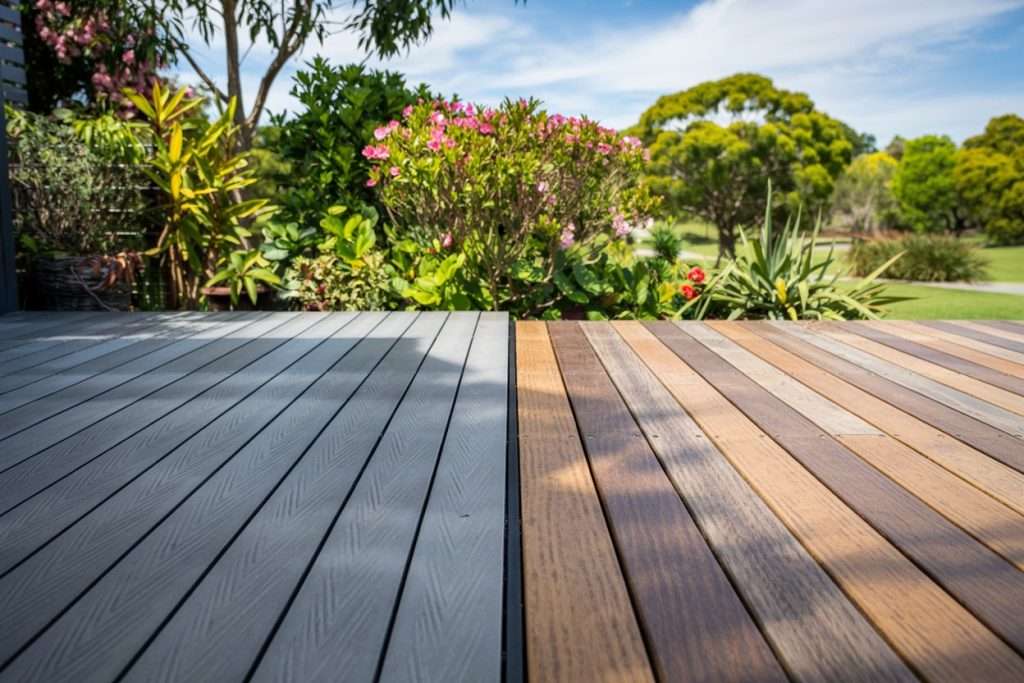
When building an outdoor deck in Australia, choosing between composite decking vs timber is one of the most significant decisions you’ll make. With Australia’s notoriously harsh climate featuring scorching summers, tropical downpours, and regional weather extremes, your decking material choice directly impacts how long your investment will last. This comprehensive guide examines whether natural timber decking or composite deck boards offer better longevity, comparing maintenance requirements, cost factors, and environmental considerations to help you make an informed decision for your outdoor space.
How long will your decking last in Australian weather conditions?
The lifespan of your outdoor decking largely depends on the type of decking material you choose and how it responds to Australia’s challenging weather patterns. Traditional timber products typically last between 10-15 years with proper maintenance, while modern composite decking materials can endure for 25-30 years or even longer. These significant differences in longevity stem directly from how each decking product responds to Australia’s diverse and often extreme weather conditions. When comparing timber vs composite decking, understanding these weather interactions is essential for making a choice that will stand the test of time.
Impact of extreme heat and UV exposure on timber and composite decking
Australia’s intense sunshine and extreme heat pose serious challenges for any outdoor decking. Natural timber decking, particularly hardwood timber varieties like merbau, can experience significant issues under prolonged UV exposure. Real timber undergoes photodegradation, where ultraviolet rays break down the wood’s lignin, causing graying, splitting, and warping of deck boards. Even with regular applications of UV-resistant sealers, a wood deck will gradually deteriorate, with most requiring resurfacing every 1-2 years to maintain their appearance and structural integrity. In contrast, the advantages of composite decking become evident in these conditions. Modern composite deck boards contain UV inhibitors integrated throughout the material—not just on the surface. Premium composite decking brands utilize advanced technology that helps these composite materials maintain their color fastness and structural properties even after years of intense Australian sunshine. While first-generation composite decking products would fade substantially, today’s composite timber decking is specifically engineered to resist UV damage, with many manufacturers offering fade and stain warranties of 25+ years—substantially outlasting what any natural timber decking can provide in similar conditions.
Effects of heavy rainfall and humidity on deck longevity
Australia’s weather patterns often deliver extended periods of heavy rainfall and high humidity, particularly in coastal and northern regions. These moisture-heavy conditions create significant challenges for timber decking or composite options alike. Natural timber products are inherently hygroscopic, meaning they naturally absorb and release moisture from the surrounding environment. This continuous expansion and contraction of timber deck boards leads to cupping, splitting, and checking over time. Even treated pine and hardwood decking varieties eventually succumb to moisture damage without regular maintenance. Mold and mildew growth also becomes problematic on damp wood surfaces. Composite decking vs wood shows significant advantages in wet conditions. Contemporary composite deck boards combine timber fibers with recycled plastic to create a material that resists water absorption. High-quality composite decking is made with protective polymer shells that encapsulate the boards, preventing moisture penetration. This composition means composite timber products won’t rot, warp, or develop fungal growth even when exposed to prolonged wet conditions. The technology behind how composite decking is made gives it a significant longevity advantage in Australia’s wetter regions where timber or composite decking choices face their toughest tests.
Regional weather variations and their impact on decking materials
Australia’s diverse climate zones present unique challenges depending on your location, significantly affecting whether timber vs composite decking is the optimal choice. In tropical northern regions like Queensland, the combination of intense heat, humidity, and heavy seasonal rainfall creates perfect conditions for timber deterioration. Traditional timber products in these areas often require maintenance every six months to combat rot, mold, and insect activity. Meanwhile, southern regions like Victoria and Tasmania experience dramatic temperature fluctuations that cause timber deck boards to expand and contract dramatically, leading to structural issues over time. Coastal areas throughout Australia expose decking materials to salt spray, which accelerates corrosion of fasteners in wood decking and can deteriorate lower-quality composite decking products. When analyzing decking vs composite performance across these regions, high-quality composite materials demonstrate superior resilience. The composite timber construction, combining wood fibers with recycled plastic polymers, creates a stable material that maintains dimensional consistency across temperature extremes. This stability means composite decking vs timber shows substantially better performance in areas with dramatic climate shifts. The best composite decking brands now engineer region-specific products that address particular Australian climate challenges, with specialized formulations designed for high-UV zones or salt-exposed coastal environments, allowing this type of decking to last longer regardless of your location.
What are the pros and cons of timber decking vs composite decking?
When evaluating timber or composite decking options, understanding the fundamental advantages and disadvantages of each material becomes crucial for making a decision that aligns with your specific needs. Both decking materials offer distinct benefits and limitations that extend beyond mere longevity considerations. The debate between timber vs composite decking encompasses everything from aesthetic preferences and tactile experience to maintenance requirements and environmental impact. This balanced assessment of pros and cons helps clarify which type of decking material might be right for your particular circumstances and priorities.
Advantages of composite decking over natural timber
The advantages of composite decking have driven its growing popularity across Australian backyards and commercial spaces. First and foremost is the minimal maintenance requirement—composite deck boards don’t need sanding, staining, or sealing, saving countless hours and expenses over the deck’s lifetime. Composite decking is made to withstand Australia’s harsh UV exposure without fading, unlike natural timber that grays regardless of treatment. The dimensional stability of composite materials means they resist warping, cupping, and splitting even when exposed to moisture fluctuations that would damage traditional timber products. Safety features represent another significant advantage of composite decking over wood options. Premium composite decking brands engineer their products with slip-resistant textures that provide better traction when wet compared to timber decking. Furthermore, composite deck boards won’t splinter, reducing the risk of injuries for barefoot users, particularly children. Many homeowners appreciate that composite decking products come in consistent, predictable colors and grain patterns, eliminating the natural variations that sometimes make timber decking installations appear uneven. Modern manufacturing techniques have also improved the structural performance of composite decking materials, with many products now offering superior span capabilities and load-bearing strength compared to some timber options. Additionally, the fact that composite decking is made partially from recycled plastic content appeals to environmentally conscious consumers looking to reduce their reliance on harvested timber.
Benefits of timber deck aesthetics and feel
Despite the practical advantages of composite decking vs timber, natural timber decking maintains enduring appeal for many Australian homeowners. The authentic look of timber creates a warmth and character that some feel composite materials haven’t fully replicated. Hardwood decking varieties like merbau, spotted gum, and blackbutt develop unique patinas over time that many homeowners find appealing, giving each timber deck a distinct personality. Real timber provides tactile benefits that some composite decking products struggle to match—natural timber stays cooler underfoot during hot summer days, an important consideration for pool decking or areas with direct sun exposure. The authentic grain patterns and natural color variations in wood deck installations create visual interest that some prefer to the more uniform appearance of composite deck boards. Many homeowners and designers value the heritage qualities of traditional timber, particularly for period homes or architectural styles where natural materials enhance authenticity. Timber decking or composite options both have enthusiastic supporters, but timber remains the preference for purists who appreciate its organic origin. Some top-tier hardwood timber choices like ironbark and jarrah offer exceptional natural resistance to insects and decay without chemical treatments, appealing to those seeking natural materials. Additionally, timber decking can be refinished multiple times, essentially creating a new surface whenever needed, whereas composite decking, while long-lasting, cannot be restored in the same manner once substantially worn.
Maintenance requirements comparison
The stark contrast in maintenance needs represents one of the most significant differences when comparing timber vs composite decking materials. Natural timber decking demands a rigorous and ongoing maintenance schedule to preserve its appearance and structural integrity. A typical timber deck requires cleaning, sanding, and resealing or re-oiling every 6-24 months depending on exposure conditions and the type of timber used. Without this regular maintenance, wood deck surfaces quickly deteriorate, developing splinters, cracks, and discoloration. Even premium hardwood decking varieties like merbau need consistent care to prevent weathering damage. In contrast, composite decking products require dramatically less maintenance. Most composite deck boards only need occasional cleaning with soap and water to remove surface dirt and debris. The composite materials resist staining, meaning that food spills and leaf tannins that would permanently mark timber can be easily cleaned from composite surfaces. While no outdoor decking is truly maintenance-free, the advantages of composite decking become particularly evident when calculating lifetime care requirements. Over a 25-year period, a timber deck might require 12-25 complete refinishing treatments, while similar composite decking needs only periodic cleaning. For busy homeowners, this maintenance difference often becomes a deciding factor when choosing between timber or composite decking options. The time savings alone—often amounting to hundreds of hours over the deck’s lifespan—makes composite decking vs wood increasingly attractive despite the higher initial investment.
How does the cost of timber decking compare to composite deck options?
Understanding the complete financial picture when comparing timber vs composite decking requires looking beyond just the initial price tag. While the upfront cost differences are significant, the true economic comparison must account for installation expenses, ongoing maintenance costs, expected lifespan, and even impact on property values. Making an informed decision about whether timber decking or composite materials represent the better value proposition means considering both short-term budget constraints and long-term financial implications of your decking choice.
Initial installation costs of the two most popular decking choices
The initial cost comparison between timber vs composite decking reveals significant differences that influence many homeowners’ decisions. Natural timber decking generally offers a lower entry price point, with treated pine representing the most economical timber option at roughly $200-300 per square meter installed. Mid-range hardwood timber choices like merbau typically cost $320-450 per square meter installed, while premium hardwood decking varieties can exceed $500 per square meter. In contrast, composite decking materials command higher upfront prices, with entry-level composite deck boards starting around $320 per square meter installed and premium composite decking brands costing $450-700+ per square meter complete. These price differentials mean that for an average 30-square-meter deck, choosing composite decking vs timber might add $3,000-$6,000 to the initial project cost. However, the installation process itself sometimes favors composite products—many modern composite decking materials feature innovative fastening systems that reduce installation time compared to traditional timber products. Additionally, composite deck boards typically come in consistent lengths and widths with fewer natural defects, reducing waste during installation. The price gap between timber or composite decking options has narrowed in recent years as economies of scale have made composite materials more competitive, but the initial investment in composite decking remains substantially higher than most timber alternatives. For budget-conscious projects requiring immediate cost minimization, timber decking often remains the more accessible option despite its long-term maintenance requirements.
Long-term maintenance expenses for each material
The long-term maintenance costs reveal perhaps the most dramatic difference when comparing timber vs composite decking economics over a deck’s lifetime. Natural timber decking requires significant ongoing investment to maintain its appearance and structural integrity. For a typical 30-square-meter timber deck, professional cleaning, sanding, and resealing can cost $1,000-$2,500 per treatment, needed every 1-3 years depending on exposure conditions and timber quality. Even DIY maintenance requires substantial expenditure on cleaners, strippers, sanders, stains, and sealants—typically $300-600 per treatment plus significant personal labor. Over a 25-year period, maintenance costs for timber decking often exceed the original installation price three to five times over. Hardwood decking varieties like merbau may require slightly less frequent maintenance but still demand regular attention and expense. In stark contrast, composite decking materials require minimal ongoing investment. Maintenance for composite deck boards typically involves only occasional cleaning with household detergent and water, perhaps using a specialized composite deck cleaner every few years at minimal cost. The advantages of composite decking become particularly evident when calculating these lifetime expenses—the absence of sanding, staining, and sealing requirements translates to savings of $10,000-$25,000 over 25 years for an average-sized deck. For those considering timber or composite decking options from a long-term financial perspective, the substantially lower maintenance costs of composite materials often offset the higher initial investment within 5-10 years, making composite decking vs timber increasingly attractive as the timeframe extends.
Return on investment and property value considerations
Beyond direct costs, the choice between timber vs composite decking can significantly impact your property’s resale value and overall return on investment. Real estate professionals increasingly recognize that outdoor living spaces, particularly well-designed decking areas, can boost property valuations by 5-12%. However, the condition of these spaces dramatically affects their contribution to home value. Natural timber decking, if impeccably maintained, can certainly enhance property appeal, but prospective buyers often factor in the anticipated maintenance requirements when assessing timber deck value. Many real estate agents report that visible maintenance needs on timber products—such as weathering, splintering, or fading—can actually detract from property valuations, with buyers mentally calculating repair costs. Conversely, composite decking’s durability and low-maintenance reputation frequently translates into stronger property value enhancement. The advantages of composite decking become particularly evident during property sales, as agents can promote these features as lifestyle benefits requiring minimal future investment. Premium composite decking brands with established reputations for longevity may command particular respect from valuation professionals. While the initial cost difference between timber or composite decking options might favor timber, the long-term return on investment often shifts toward composite materials when considering the combined factors of reduced maintenance expenses, longer useful life, and stronger property value enhancement. For investment properties or homeowners planning to sell within 5-10 years, this ROI differential can make composite decking vs timber the more financially prudent choice despite higher upfront costs.
What maintenance is required for timber vs composite decking in Australia?
The stark contrast in maintenance requirements represents one of the most significant practical differences when choosing between timber and composite decking. Australia’s harsh climate creates particular challenges for deck maintenance, with intense UV exposure, seasonal downpours, and regional weather variations all demanding specific care protocols. Understanding the real-world maintenance needs for different decking materials helps homeowners make choices aligned with their lifestyle preferences and willingness to commit time and resources to outdoor space upkeep.
Timber deck sealing, staining and refinishing requirements
Maintaining natural timber decking demands a comprehensive and cyclical care regimen to preserve both aesthetics and structural integrity. For most timber products exposed to Australian conditions, a complete refinishing process should occur every 12-24 months, with more frequent treatments needed in high-exposure areas. This maintenance cycle typically begins with thorough cleaning using specialized timber cleaners to remove built-up dirt, mold, and graying. Next, light sanding is required to remove damaged surface fibers and prepare the wood for new sealer application. The actual sealing process involves applying oil-based or acrylic products that penetrate the timber to provide protection against moisture and UV damage. For painted timber decks, the process becomes even more labor-intensive, requiring complete stripping of old coatings before new applications. Hardwood decking varieties like merbau, though naturally more resistant than softwoods, still require regular maintenance to prevent checking and splitting. The specific challenges of Australian weather mean that timber deck maintenance often follows seasonal patterns—pre-summer treatments protect against intense UV exposure, while pre-winter maintenance prepares for wetter conditions. Even with diligent care, real timber eventually shows wear that requires more substantial restoration. After approximately 7-10 years, most timber decking needs comprehensive renovation involving deep sanding to remove several millimeters of damaged surface wood, sometimes requiring board replacement where degradation has progressed too far. This recurring maintenance cycle represents a significant commitment for timber deck owners—both in terms of direct costs and personal time investment—that must be honestly assessed when comparing timber vs composite decking options.
Composite deck cleaning and care procedures
The maintenance regimen for composite decking presents a dramatically simplified alternative to traditional timber care requirements. For most composite deck boards, routine maintenance consists primarily of periodic cleaning with soap and water to remove surface dirt, pollen, and leaf debris. This simple cleaning—typically performed with a soft brush or pressure washer on very low settings—maintains the appearance and functional properties of composite materials without the intensive labor required for timber restoration. Unlike timber decking or composite options of earlier generations, modern composite decking is made with advanced protective technologies that resist staining and fading. Premium composite decking brands typically incorporate stain-resistant polymers that prevent organic materials like leaf tannins, food spills, and grease from permanently marking the surface. When more stubborn stains do occur, most can be removed using specialize
Recent Posts
Building a beautiful and durable deck requires careful planning and execution, especially when working with composite decking. This guide will walk you through the essential steps to achieve...
A comprehensive guide to achieving flawless miter joints when working with composite decking. This article delves into the intricacies of miter cuts, essential tools, and expert techniques to ensure...