
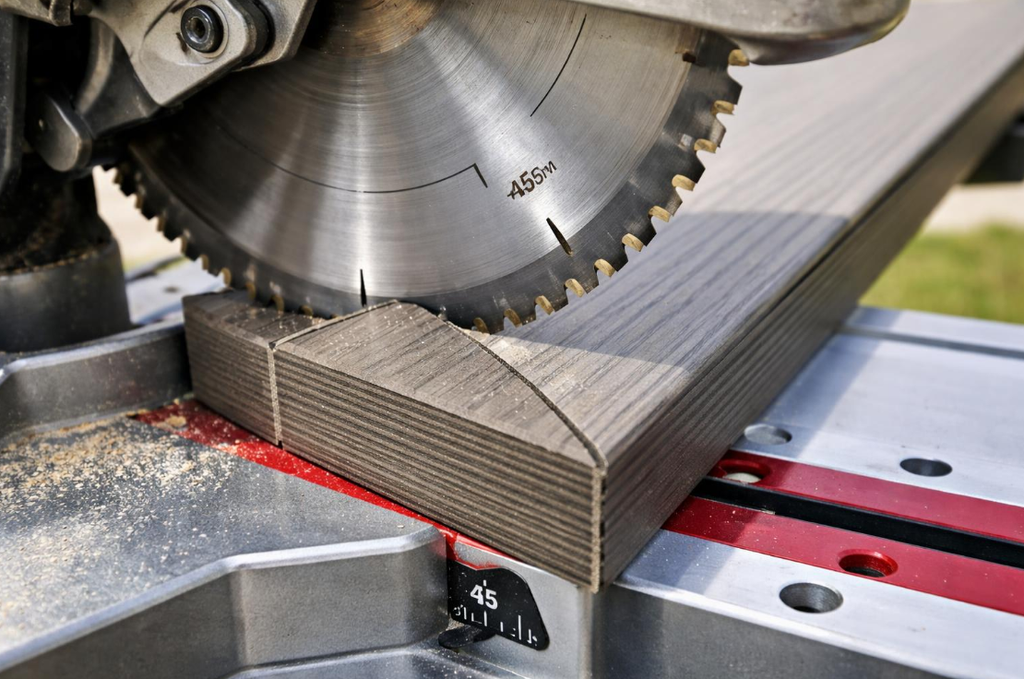
A comprehensive guide to achieving flawless miter joints when working with composite decking. This article delves into the intricacies of miter cuts, essential tools, and expert techniques to ensure your deck project boasts professional-grade aesthetics and durability. Check out our general guide to cutting composite decking.
Understanding Miter Cuts in Composite Decking
Achieving a polished and professional finish on your new deck, especially when dealing with composite materials, often hinges on the precision of your miter cuts. Understanding how miter cuts function in the context of a composite deck board is crucial for anyone looking to properly install their composite decking, ensuring both structural integrity and visual appeal.
What is a Miter Cut?
A miter cut involves trimming the end of a board at an angle, typically 45 degrees, so that when two mitered pieces are joined, they form a 90-degree corner. This technique is fundamental for creating seamless miter joints, which are especially vital when you want to achieve a sophisticated look for your composite deck, avoiding the less refined appearance of a simple butt joint.
Importance of Miter Joints in Composite Decking
Miter joints are paramount in composite decking because they create a clean, continuous line, particularly noticeable in picture frame borders or around deck edges. Unlike traditional wood decking, composite materials like Trex or TimberTech often benefit greatly from precise mitered corners, as this attention to detail significantly enhances the overall aesthetic appeal of the composite deck, giving it a high-end finish that can’t be replicated with less refined methods.
Tools Needed for Cutting Composite Decking
To achieve the best results when cutting composite decking, selecting the right power tools is essential. A high-quality miter saw, especially a compound miter saw or a sliding miter saw, is indispensable for making accurate miter cuts. Additionally, a circular saw can be useful for rip cuts or when you need to cut composite decking for longer sections, while a table saw provides excellent stability for precise, repetitive cuts on composite boards.
Proper Techniques for Cutting Composite Deck Boards
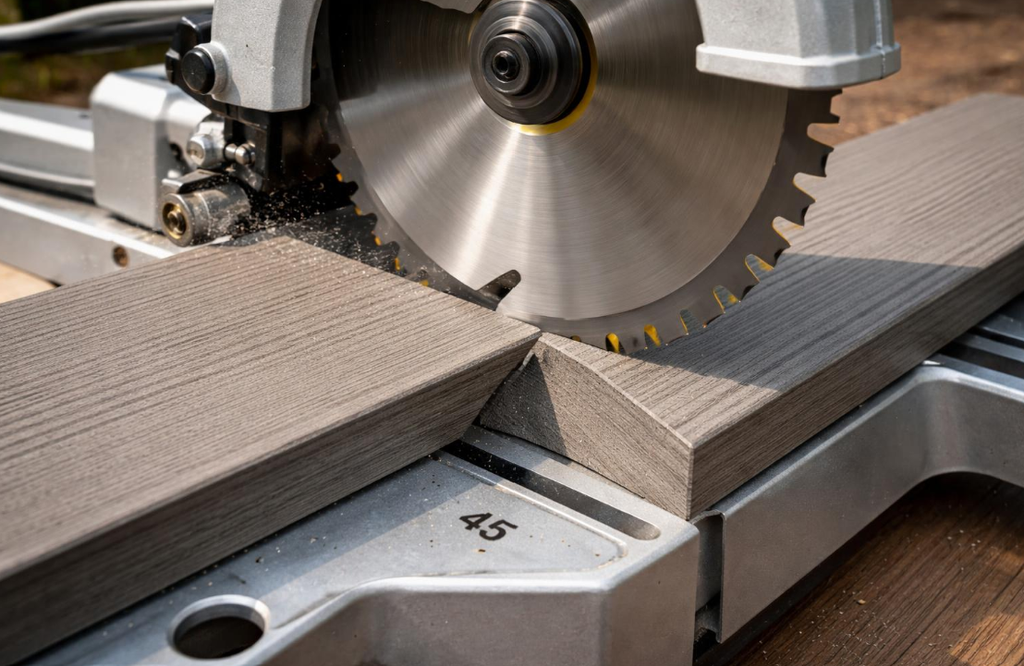
### Making Precise Cuts for Mitered Corners
When creating those essential mitered corners for your composite deck, precise cuts are paramount. Utilizing a high-quality miter saw, specifically a compound miter saw or a sliding miter saw, will allow you to achieve the exact angles required for a seamless miter joint. Remember that accuracy in trimming the end of the board at the correct angle is what separates a professional finish from a mediocre one, especially when working with composite materials like Trex or TimberTech.
Step-by-Step Guide to Cut Composite Decking
To properly cut composite decking, start by accurately marking your cut line on the composite deck board. Position the deck board firmly against the fence of your miter saw. Carefully set the miter saw to the desired angle for your miter cut, typically 45 degrees for a mitered corner. Engage the saw blade and make a slow, controlled cut through the composite material, ensuring a clean and precise cut. For longer sections or rip cuts, a circular saw or table saw might be more suitable.
Common Mistakes to Avoid When Cutting
One common mistake when cutting composite deck boards is rushing the process, which often leads to inaccurate miter cuts and wasted material. Another error is not using the appropriate power tools; a dull saw blade on your miter saw can cause splintering or a rough finish on the composite deck board. Failing to account for the expansion and contraction of composite materials by not leaving a gap where necessary can also lead to issues with your miter joints over time, potentially impacting the longevity of your composite deck.
Creating Mitered Corners for a Seamless Look
### Planning Your Composite Deck Layout
Achieving a seamless look with mitered corners on your composite deck begins with meticulous planning of your composite deck layout. Carefully consider the direction of your deck boards and how they will meet at the mitered corners, especially if you are incorporating a picture frame border. Proper planning ensures you minimize waste and make the most efficient use of your composite decking properly, leading to a professional finish that truly stands out.
How to Leave a Gap for Expansion
When creating mitered corners, it’s crucial to leave a gap to accommodate the expansion and contraction inherent in composite materials like Trex or TimberTech. While you want a tight miter joint for aesthetic appeal, ignoring this step can lead to buckling or warping over time. Consult the manufacturer’s guidelines for your specific composite deck board to determine the appropriate gap size, ensuring the longevity and structural integrity of your new deck.
Finishing Touches for Mitered Joints
After making your precise cuts and joining the mitered corners, the finishing touches are essential for a truly seamless miter joint. While some might consider using glue for extra adhesion, it’s generally not recommended for composite decking due to the material’s movement. Instead, secure your deck boards with appropriate hidden fasteners or screws, ensuring the mitered edges remain tight and flush. This attention to detail elevates the overall aesthetic of your composite deck.
Advantages of Using Trex for Miter Cuts
### Durability and Aesthetic Appeal of Trex
Trex composite decking offers significant advantages when it comes to durability and aesthetic appeal, particularly for miter cuts and mitered corners. Its consistent density and composition make it easier to achieve precise cuts with a miter saw, leading to tighter, more attractive miter joints compared to traditional wood decking. The inherent durability of Trex ensures that these beautifully mitered edges will resist rot, splintering, and insect damage, maintaining their pristine look for years on your deck.
Comparing Trex with Other Composite Decking Options
When comparing Trex with other composite decking options for miter cuts, Trex often stands out due to its workability and consistent material properties. While other brands like TimberTech also offer quality composite materials, many professionals find Trex composite boards to be particularly forgiving when making intricate cuts, such as a bevel or a precise miter cut for a picture frame. This ease of cutting composite decking properly contributes to a cleaner finish and less material waste, making Trex a favorable choice.
Tips for Working with Trex Composite Deck Boards
Working with Trex composite deck boards for mitered corners requires a few specific tips to achieve optimal results. Always use a sharp, high-quality saw blade on your miter saw or circular saw to prevent fraying or rough edges on the composite deck board. When making a miter cut, support the entire length of the deck board to ensure stability and accuracy. Remember to account for the thermal expansion and contraction by leaving the recommended gap, ensuring your Trex deck remains beautiful and stable over time.
FAQ
Can I make a square cut on composite decking when mitering corners?
Yes, you can make a square cut on composite decking, but when you miter the joints you typically cut at an angle rather than a true square to form tight miters. For applications where a square cut is needed—such as butt joints against a joist or fitting boards to size—use tools suitable for cutting decking like a portable table saw or a circular saw with a fine-tooth blade. Always mark the board, measure twice during measuring and cutting, and wear PPE to protect against composite dust whether working with WPC, PVC, or brands like Azek.
How do I achieve accurate square cut and miters open for tight joints?
Accurate cuts start with proper setup: mark the board clearly, clamp the board tightly together or to a work surface, and use a reliable saw (many craftsmen prefer a Dewalt or a new saw with a dual bevel miter saw for repeatable angles). For miters open or closed, test-fit scrap pieces to confirm the joint before cutting final boards. Account for the width of the board and allow for movement in outdoor living conditions by not forcing boards too tightly together, and use top screw placement or hidden fasteners according to the decking manufacturer.
What saws used are best for square cut crosscutting of composite boards?
For crosscutting and square cut ends on composite decking, a miter saw with a carbide-tipped blade designed for composite materials is ideal; a portable table saw or circular saw with the correct blade can also be used for cutting deck boards and rip-cut tasks. Look for blades labeled for plastics or composites to reduce chipping. Brands like Dewalt make miter saws and blades suited for WPC and PVC composite products; a dual bevel saw speeds up angled cuts when you need both left and right miters.
Should I square cut or miter the joints when fitting around posts and joists?
Fitting around posts and joists often requires a combination of square cut and miter the joints depending on the detail. For posts you may need curved cuts or coping, but for boards that butt against a joist a precise square cut at the cut edge is typical. Measure the exact size of the opening, mark the board, and cut the ends so the board fits around posts without creating excessive screw holes near the edge. Allow for movement to prevent buckling in outdoor space installations.
How do I measure and cutting decking to boards to size for a craftsman miter look?
Start by measuring and cutting each board to the exact size required for the layout. Use a carpenter’s square to establish true square cut references if you plan to crosscut. For a craftsman miter appearance, set your miter saw to the required angle and cut both pieces the same way so the miters meet tightly together. When measuring and cutting, consider the width of the board and include spacing to allow for movement in outdoor living conditions; label boards as you cut to keep track of orientation and grain direction for a consistent finish.
Do I need special PPE or blade types when cutting WPC, PVC, or Azek composite decking?
Yes. Composite materials like WPC and PVC produce fine dust and small particles when cutting, so wear eye protection, a dust mask or respirator, hearing protection, and gloves. Use blades designed for composite materials with carbide tips to get clean, accurate cuts and reduce chipping. Follow manufacturer recommendations for saw speed and feed rate to protect the material and your tools, and use a dust collection system where possible.
How do I prevent gaps at the miter the joints and ensure the cut edge looks professional?
To prevent gaps at miters and make the cut edge look professional, make sure the miters are cut precisely using a calibrated miter saw or a guide for a circular saw. Clamp boards snugly and check miters open and closed in dry fit before final fastening. Countersink or predrill screw holes and use top screw placement or hidden fastener systems per the manufacturer’s guidance. Also account for board expansion and contraction outdoors—allow for movement so joints don’t pull apart or push tightly together when temperatures change.
Can I use a rip-cut or crosscut technique for curved cuts and custom fit on composite decking?
Yes, rip-cutting is typically used to cut boards to width while crosscutting or using a jigsaw or coping saw is used for curved cuts or notches when you need to fit around unique features. For curved cuts on composite decking, score the cut line, use the right blade and speed, and finish edges to remove burrs. When fitting complex shapes, mark the board carefully, cut slowly, and test-fit frequently to ensure the piece will fit around posts, joists, and other obstacles without creating excessive screw holes or weakening the cut edge.
Recent Posts
Building a beautiful and durable deck requires careful planning and execution, especially when working with composite decking. This guide will walk you through the essential steps to achieve...
Australia boasts some of the world's most remarkable hardwood timber species, with strength properties that rival or exceed international alternatives. From the legendary hardness of Ironbark to the...