

Picture this: I’m standing in my backyard on a sunny Saturday morning in 2026, staring at my weathered, splintering fence that’s seen better days. My neighbor leans over and asks, “So, what are you thinking for the replacement?” I freeze. Wood? Metal? Something modern? The truth hit me—I had no idea where to start when it comes to exploring different fence materials: wood, composite, metal and the rest. If you’ve ever felt overwhelmed by the sheer variety of fencing options available today, you’re definitely not alone. Choosing the right fence material isn’t just about aesthetics; it’s about durability, maintenance, cost, privacy, and how well it fits your lifestyle and climate.
In this comprehensive guide, I’ll walk you through everything you need to know about exploring different fence materials: wood, composite, metal and the rest. Whether you’re building your first fence, replacing an old one, or simply curious about modern options, I’ve got you covered with real-world insights, practical comparisons, and honest advice based on research and experience.
Key Takeaways
- Wood fencing offers classic beauty and versatility but requires regular maintenance including staining, sealing, and repairs to prevent rot and insect damage.
- Composite materials provide a low-maintenance alternative that mimics wood’s appearance while offering superior durability and resistance to weathering.
- Metal fencing (aluminum, steel, wrought iron) delivers exceptional longevity and security with minimal upkeep, though typically at a higher initial cost.
- Alternative materials like vinyl, bamboo, and chain-link each serve specific needs—from budget-friendly solutions to eco-conscious options.
- Your choice should balance initial investment, long-term maintenance costs, climate considerations, aesthetic preferences, and intended purpose (privacy, security, decoration).
Understanding Your Fencing Needs: Where To Begin
Before diving into specific materials, let’s talk about what you actually need from a fence. I learned this lesson the hard way when I rushed into my first fencing project without proper planning.
Defining Your Primary Purpose
Fences serve multiple functions, and understanding your priorities will dramatically narrow your options:
- Privacy: Need to block views from neighbors or the street? You’ll want solid panels or tightly spaced pickets.
- Security: Protecting children, pets, or property? Height, strength, and durability become critical factors.
- Aesthetic appeal: Looking to boost curb appeal? Design flexibility and visual impact matter most.
- Property boundaries: Simply marking your lot lines? Cost-effective solutions might suffice.
- Noise reduction: Living near busy roads? Some materials offer better sound dampening than others.
Climate And Environmental Factors
Your local weather patterns play a huge role in material performance. In Australia’s diverse climate zones, what works brilliantly in Melbourne’s temperate conditions might struggle in Darwin’s tropical humidity or Perth’s dry heat.
Consider these environmental factors:
- Moisture levels and rainfall
- Temperature extremes
- UV exposure and sun intensity
- Salt air (coastal properties)
- Wind conditions
- Bushfire risk zones
Budget Considerations: Initial Vs. Long-Term Costs
Here’s where many homeowners get tripped up—focusing solely on upfront costs while ignoring maintenance expenses. A cheaper fence that needs replacing in 5 years isn’t actually economical compared to a pricier option lasting 25 years with minimal upkeep.
Think about:
- Installation costs (DIY vs. professional)
- Material prices per linear meter
- Annual maintenance requirements
- Repair and replacement frequency
- Property value impact
For comprehensive information about fencing regulations and requirements, it’s worth consulting local guidelines before making your final decision.
Wood Fencing: The Traditional Choice With Timeless Appeal
There’s something undeniably warm and inviting about a wooden fence. It’s been the go-to choice for centuries, and for good reason. When I helped my parents replace their fence last year, they insisted on wood despite my suggestions about modern alternatives—and honestly, the finished product looks absolutely stunning.
Types Of Wood For Fencing
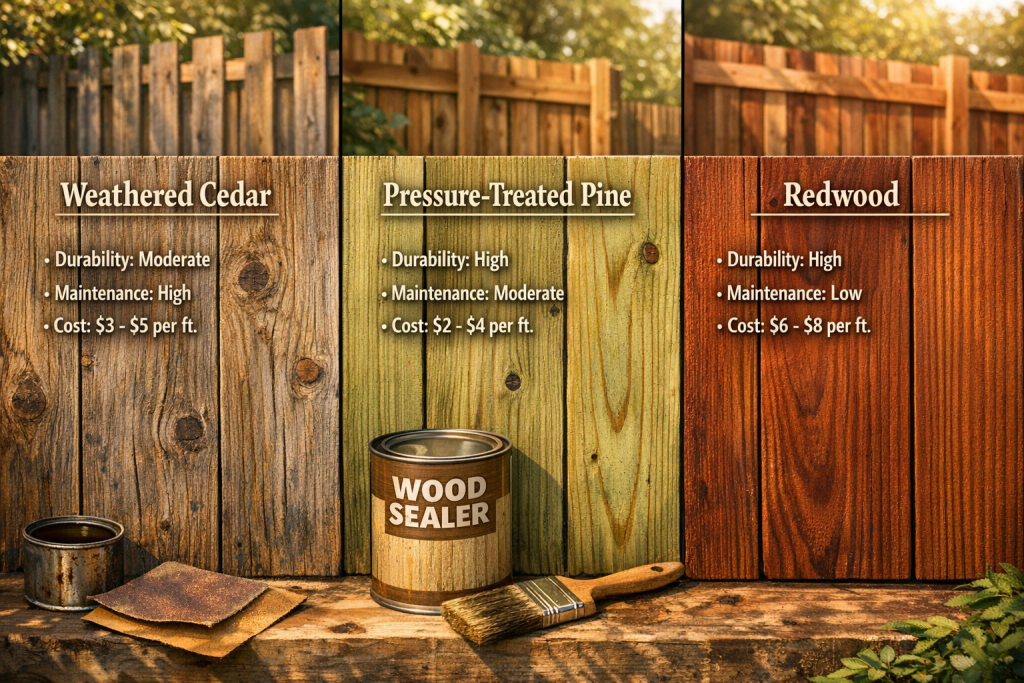
Not all wood is created equal when it comes to fencing. Here’s a breakdown of the most popular options:
Cedar 🌲
Cedar is the premium choice for wooden fencing, and it’s easy to see why:
- Natural rot resistance: Contains oils that repel insects and resist decay
- Beautiful grain: Ages to an attractive silver-grey patina
- Lightweight: Easier to work with during installation
- Aromatic: That fresh cedar smell is a bonus
- Cost: Higher initial investment but excellent longevity
Pine (Pressure-Treated) 🌲
The most budget-friendly option, pressure-treated pine undergoes chemical treatment to enhance durability:
- Affordability: Significantly cheaper than cedar or redwood
- Widely available: Easy to source at most lumber suppliers
- Good durability: When properly treated and maintained
- Appearance: Greenish tint initially, fades to grey over time
- Maintenance: Requires regular sealing and staining
Redwood 🌲
Similar to cedar but with its own distinct characteristics:
- Natural beauty: Rich reddish-brown color
- Rot resistance: Contains natural tannins
- Dimensional stability: Resists warping and shrinking
- Cost: Premium pricing, especially for heartwood
- Sustainability concerns: Slower growing, less readily available
Pros And Cons Of Wood Fencing
Advantages:
✅ Versatility: Can be cut, shaped, and customized to virtually any design
✅ Natural aesthetic: Complements most architectural styles
✅ Repairability: Individual boards can be replaced easily
✅ DIY-friendly: Accessible for homeowners with basic carpentry skills
✅ Renewable resource: Especially when sourced sustainably
Disadvantages:
❌ Maintenance intensive: Requires staining/sealing every 2-3 years
❌ Susceptible to damage: Rot, insects, warping, and splitting
❌ Limited lifespan: Typically 10-15 years, even with good care
❌ Weather vulnerability: Moisture and UV exposure take their toll
❌ Fire risk: Not ideal for bushfire-prone areas
Maintenance Requirements For Wood Fences
If you choose wood, commit to proper maintenance. Here’s what you’re signing up for:
Annual tasks:
- Inspect for damage, rot, or insect activity
- Clean with mild detergent and water
- Check and tighten loose fasteners
- Trim vegetation touching the fence
Every 2-3 years:
- Sand rough or splintered areas
- Apply quality wood stain or sealant
- Repair or replace damaged boards
As needed:
- Address rot immediately to prevent spread
- Replace broken or severely weathered pickets
- Reinforce or replace posts showing instability
The maintenance might sound daunting, but many homeowners find it therapeutic—a weekend project that keeps their property looking sharp.
Composite Fencing: Modern Innovation Meets Low Maintenance
When I first encountered composite fencing at a home show, I was skeptical. “Plastic pretending to be wood?” I thought. But after seeing installations that were several years old still looking pristine, I became a believer in this innovative material.
What Is Composite Fencing?
Composite fencing is manufactured from a blend of wood fibers and recycled plastic polymers. This combination creates a material that captures wood’s aesthetic appeal while dramatically improving durability and reducing maintenance needs.
The technology behind composites has advanced significantly in recent years. Modern formulations offer:
- Realistic wood grain textures
- Fade-resistant coloring
- Enhanced structural integrity
- Improved moisture resistance
- Better temperature stability
Similar to composite decking materials, fence composites have evolved from early versions that looked obviously artificial to today’s products that can fool even experienced contractors.
Types Of Composite Materials
Solid Core Composite
These boards are dense throughout, offering maximum strength and durability:
- Heavier and more substantial feel
- Better impact resistance
- Higher cost
- Excellent for high-traffic areas
- More difficult to cut and install
Hollow Core Composite
Featuring internal chambers, these boards balance performance with affordability:
- Lighter weight for easier installation
- More economical pricing
- Adequate strength for most applications
- Better insulation properties
- May require additional support
For a deeper dive into the differences, check out this guide on solid vs. hollow composite boards.
Advantages Of Composite Fencing
Why homeowners love composite:
✅ Minimal maintenance: No staining, sealing, or painting required
✅ Longevity: 25-30+ year lifespan with proper installation
✅ Consistent appearance: Won’t fade, crack, or splinter significantly
✅ Eco-friendly: Made from recycled materials
✅ Termite-proof: Insects won’t damage composite materials
✅ Color variety: Available in multiple shades and finishes
✅ Warranty protection: Many manufacturers offer 20-25 year warranties
Disadvantages And Considerations
What to watch out for:
❌ Higher upfront cost: 2-3x more expensive than basic wood initially
❌ Heat retention: Can become hot to touch in direct sunlight
❌ Repair challenges: Damaged sections require full board replacement
❌ Expansion/contraction: Requires proper gapping during installation
❌ Limited customization: Can’t be easily cut into decorative shapes
❌ Weight: Heavier than wood, requiring sturdy posts and support
Is Composite Worth The Investment?
Let me break down the math that convinced me composite makes financial sense:
10-year cost comparison (30 linear meters):
| Material | Initial Cost | Maintenance (10 yrs) | Total |
|---|---|---|---|
| Pine | $3,000 | $1,500 | $4,500 |
| Cedar | $6,000 | $1,200 | $7,200 |
| Composite | $9,000 | $200 | $9,200 |
While composite costs more upfront, the time savings are equally valuable. Those weekends you’d spend staining and repairing a wood fence? You’ll get them back with composite.
If you’re interested in related composite products, explore options like composite bunk boards for other outdoor projects.
Metal Fencing: Strength, Security, And Style
Metal fencing represents the pinnacle of durability and security. When my sister needed a fence for her pool area to meet Australian pool fencing regulations, metal was the obvious choice—and it’s still looking perfect five years later.
Types Of Metal Fencing Materials
Aluminum Fencing 🔩
The lightweight champion of metal fencing:
Characteristics:
- Rust-resistant and corrosion-proof
- Lightweight yet surprisingly strong
- Powder-coated finishes in various colors
- Excellent for decorative applications
- Lower cost than wrought iron or steel
Best uses:
- Pool enclosures
- Front yard decorative fencing
- Areas where rust is a concern
- Properties needing elegant appearance
Limitations:
- Not as strong as steel for security
- Can dent from significant impacts
- Limited privacy (typically open designs)
Steel Fencing 🔩
When strength and security are paramount:
Characteristics:
- Exceptional strength and durability
- Available in various gauges (thickness)
- Can be galvanized or powder-coated
- Excellent for security applications
- Heavier and more expensive than aluminum
Best uses:
- Commercial properties
- High-security residential areas
- Industrial applications
- Properties requiring maximum protection
Considerations:
- Requires rust protection (galvanization/coating)
- Professional installation recommended
- Higher material and labor costs
Wrought Iron Fencing 🔩
The classic, elegant option with old-world charm:
Characteristics:
- Extremely durable and long-lasting
- Can be crafted into ornate designs
- Heavy and substantial
- Requires maintenance to prevent rust
- Premium pricing
Best uses:
- Historic properties
- Upscale residential estates
- Properties valuing traditional aesthetics
- Front yard showcase fencing
Maintenance needs:
- Regular inspection for rust
- Touch-up painting every few years
- Rust removal and treatment as needed
Chain-Link Fencing 🔗
The practical, budget-conscious choice:
Characteristics:
- Most affordable metal option
- Quick and easy installation
- Durable and long-lasting
- Available in various heights and gauges
- Can be vinyl-coated for improved appearance
Best uses:
- Pet containment
- Temporary barriers
- Sports facilities
- Budget-conscious projects
- Areas where visibility is desired
Appearance improvements:
- Vinyl coating (black, green, brown)
- Privacy slats
- Decorative top rails
- Climbing plants for natural screening
Metal Fencing Pros And Cons
Advantages:
✅ Exceptional durability: 20-50+ year lifespan depending on type
✅ Low maintenance: Occasional cleaning, minimal repairs
✅ Security: Difficult to breach or damage
✅ Fire-resistant: Ideal for bushfire zones
✅ Pest-proof: Termites and other insects can’t damage metal
✅ Property value: Premium appearance boosts curb appeal
✅ Warranty: Many come with substantial manufacturer warranties
Disadvantages:
❌ Higher cost: Premium pricing for quality materials
❌ Limited privacy: Most styles are see-through (unless paneled)
❌ Professional installation: Often required, adding to costs
❌ Rust potential: Steel and iron require protective coatings
❌ Conductivity: Can become hot in direct sun
❌ Less DIY-friendly: Requires specialized tools and skills
Maintenance For Metal Fences
One of metal’s biggest advantages is minimal maintenance requirements:
Annual maintenance:
- Rinse with water to remove dirt and debris
- Inspect for rust spots or coating damage
- Check and tighten loose fasteners
- Lubricate hinges and latches
Every 3-5 years:
- Touch up paint or powder coating as needed
- Address any rust immediately
- Inspect structural integrity
As needed:
- Repair or replace damaged sections
- Remove rust and repaint affected areas
- Straighten bent components
The time investment is minimal compared to wood—usually just a couple hours annually versus entire weekends.
Exploring Alternative Fence Materials: Beyond The Big Three
While wood, composite, and metal dominate the fencing market, several alternative materials deserve consideration. These options often excel in specific situations or offer unique benefits that mainstream materials can’t match.
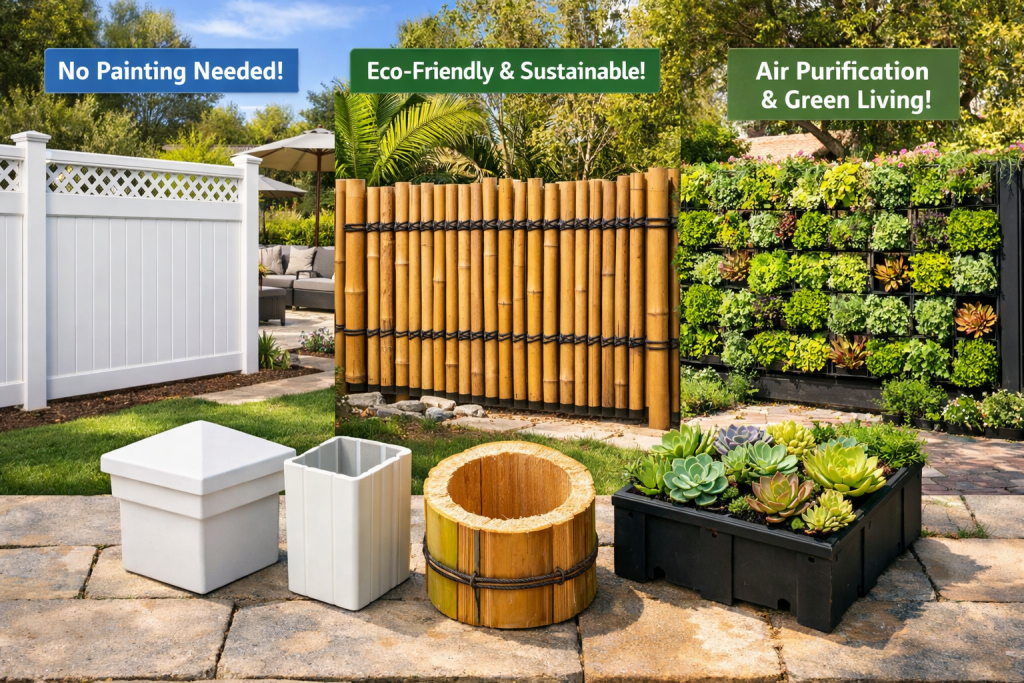
Vinyl (PVC) Fencing
Vinyl has carved out a significant niche in the fencing world, particularly for homeowners seeking a white picket fence aesthetic without the maintenance headaches.
What is it?
Polyvinyl chloride (PVC) fencing consists of hollow or foam-filled vinyl profiles designed to mimic traditional wood fence styles.
Advantages:
- Zero maintenance (no painting, staining, or sealing)
- Won’t rot, warp, or splinter
- Excellent moisture resistance
- Available in various styles (picket, privacy, rail)
- 20-30 year lifespan
- Comes with warranties
Disadvantages:
- Can become brittle in extreme cold
- Limited color options (mostly white, tan, grey)
- Difficult to repair (usually requires section replacement)
- Can fade over time despite UV inhibitors
- Higher initial cost than wood
- Less environmentally friendly than natural materials
Best for:
- Properties in moderate climates
- Homeowners wanting classic white fence appearance
- Those prioritizing zero maintenance
- Areas with high moisture
Bamboo Fencing
As someone who appreciates sustainable materials, I’ve always been intrigued by bamboo’s potential in fencing applications.
What is it?
Bamboo fencing uses this fast-growing grass (yes, it’s technically grass!) in various configurations—from rolled screening to constructed panels.
Advantages:
- Highly sustainable (grows rapidly, 3-5 years to maturity)
- Natural, tropical aesthetic
- Relatively affordable
- Lightweight and easy to install
- Renewable resource
- Biodegradable
Disadvantages:
- Shorter lifespan (5-10 years typically)
- Requires treatment for outdoor durability
- Can fade and weather quickly
- Susceptible to mold and mildew
- Limited structural strength
- Not ideal for security or privacy
Best for:
- Decorative screens and accents
- Tropical or Asian-inspired landscapes
- Temporary fencing solutions
- Eco-conscious homeowners
- Balcony or patio privacy screens
Living Fences (Hedges And Green Walls)
Nothing beats the natural beauty of a living fence, though they come with their own unique considerations.
What are they?
Plants grown densely to form a barrier—either traditional hedges or modern vertical garden systems.
Popular hedge plants:
- Privet
- Boxwood
- Photinia
- Lilly Pilly
- Bamboo (clumping varieties)
Advantages:
- Beautiful, natural appearance
- Provides habitat for wildlife
- Improves air quality
- Sound dampening properties
- Can increase property value
- Environmentally beneficial
Disadvantages:
- Requires regular trimming and maintenance
- Takes years to reach full height
- Needs watering, especially when establishing
- Can die from disease or neglect
- May attract pests
- Root systems can cause issues
Best for:
- Patient homeowners
- Properties with adequate space
- Those prioritizing environmental benefits
- Areas where traditional fences are restricted
- Softening harsh architectural lines
Glass Fencing
A modern, upscale option that’s gained popularity, especially for pool areas and properties with views.
What is it?
Tempered or laminated glass panels mounted in metal or wood frames, or frameless with specialized hardware.
Advantages:
- Unobstructed views
- Modern, sophisticated appearance
- Excellent for pool fencing
- Durable and long-lasting
- Easy to clean
- Doesn’t block light
Disadvantages:
- Premium pricing (most expensive option)
- Shows water spots and fingerprints
- Requires regular cleaning
- Professional installation essential
- Can crack or shatter (though safely with tempered glass)
- Limited privacy
Best for:
- Pool enclosures
- Properties with scenic views
- Modern architectural styles
- Homeowners prioritizing aesthetics over budget
- Areas requiring safety barriers without view obstruction
Stone And Masonry Fencing
The ultimate in permanence and traditional elegance.
What is it?
Fences constructed from brick, stone, concrete blocks, or rendered masonry.
Advantages:
- Extremely durable (50+ years)
- Excellent privacy and noise reduction
- Fire-resistant
- Low maintenance once established
- Adds significant property value
- Superior security
Disadvantages:
- Highest initial cost
- Requires professional installation
- Permanent (difficult to modify or remove)
- May require permits and engineering
- Can be damaged by ground movement
- Blocks airflow
Best for:
- Properties on busy streets
- Historic or traditional homes
- Homeowners prioritizing permanence
- Areas with noise pollution
- Properties requiring maximum security and privacy
Comparing Fence Materials: Making Your Decision
Now that we’ve explored different fence materials—wood, composite, metal and the rest—let’s put everything into perspective with direct comparisons.
Cost Comparison Table
Here’s a realistic cost breakdown per linear meter, including materials and professional installation (2026 Australian market):
| Material | Cost Per Linear Meter | Lifespan | Annual Maintenance Cost |
|---|---|---|---|
| Pine (treated) | $100-150 | 10-15 years | $50-100 |
| Cedar | $200-300 | 15-20 years | $40-80 |
| Composite | $300-450 | 25-30 years | $10-20 |
| Aluminum | $250-400 | 20-30 years | $10-30 |
| Steel | $350-500 | 30-50 years | $20-40 |
| Wrought Iron | $400-600 | 50+ years | $30-60 |
| Chain-Link | $50-100 | 20-30 years | $10-20 |
| Vinyl | $200-350 | 20-30 years | $5-15 |
| Bamboo | $80-150 | 5-10 years | $20-40 |
Durability And Lifespan Comparison
Longest lasting (30+ years):
- Wrought iron
- Steel (properly maintained)
- Composite
- Stone/masonry
Moderate lifespan (15-30 years):
- Aluminum
- Vinyl
- Cedar
- Chain-link
Shorter lifespan (5-15 years):
- Pressure-treated pine
- Bamboo
- Living fences (variable)
Maintenance Requirements Comparison
Minimal maintenance:
- Composite (cleaning only)
- Vinyl (occasional washing)
- Aluminum (rinse and inspect)
- Chain-link (basic inspection)
Moderate maintenance:
- Steel (rust prevention)
- Wrought iron (painting, rust treatment)
- Glass (regular cleaning)
High maintenance:
- Wood (staining, sealing, repairs)
- Bamboo (treatment, replacement)
- Living fences (trimming, watering, care)
Environmental Impact Comparison
Most eco-friendly:
- Living fences (carbon sequestration)
- Bamboo (renewable, fast-growing)
- Sustainably sourced wood
- Recycled composite
Moderate environmental impact:
- Aluminum (recyclable but energy-intensive production)
- Steel (recyclable, durable)
Higher environmental impact:
- Vinyl (petroleum-based, not biodegradable)
- Concrete/masonry (high embodied energy)
Climate Suitability
Hot, dry climates:
- ✅ Metal (aluminum, steel)
- ✅ Composite (heat-stable formulations)
- ✅ Vinyl
- ⚠️ Wood (requires extra maintenance)
Humid, wet climates:
- ✅ Composite
- ✅ Vinyl
- ✅ Aluminum
- ⚠️ Wood (increased rot risk)
- ❌ Bamboo (mold issues)
Coastal areas (salt exposure):
- ✅ Aluminum
- ✅ Vinyl
- ✅ Composite
- ⚠️ Steel (requires excellent coating)
- ❌ Iron (high rust risk)
Bushfire-prone zones:
- ✅ Metal (all types)
- ✅ Stone/masonry
- ⚠️ Composite (check fire rating)
- ❌ Wood
- ❌ Bamboo
- ❌ Living fences
Installation Considerations: DIY Vs. Professional

Whether you’re exploring different fence materials—wood, composite, metal and the rest—installation complexity varies dramatically by material choice.
DIY-Friendly Materials
Easiest to install yourself:
- Chain-link: Straightforward with basic tools
- Pressure-treated pine: Accessible for DIY enthusiasts with basic woodworking tools
- Bamboo screening: Simple attachment to existing structures
- Vinyl panels: Designed for homeowner installation
Skills required:
- Basic carpentry or metalworking
- Ability to dig post holes
- Understanding of level and plumb
- Physical stamina for labor-intensive work
Tools needed:
- Post hole digger or auger
- Level
- Measuring tape
- Saw (circular or miter)
- Drill and appropriate bits
- Concrete mixing supplies
Professional Installation Recommended
Materials best left to experts:
- Wrought iron: Requires specialized welding and fabrication
- Glass: Safety concerns and specialized hardware
- Stone/masonry: Structural engineering and skilled masonry
- Steel security fencing: Precision and specialized equipment
Why hire professionals?
- Warranty protection (many void with DIY installation)
- Proper permits and code compliance
- Specialized tools and equipment
- Experience with material-specific challenges
- Faster completion time
- Professional appearance and longevity
Installation Tips For All Materials
Regardless of material choice, these fundamentals apply:
Planning phase:
- Check local regulations and obtain permits
- Call before you dig (utility location)
- Measure accurately and order 10% extra material
- Plan gate locations carefully
- Consider drainage and grade
Post installation:
- Dig holes 1/3 the height of the above-ground fence
- Use concrete for stability (especially for heavy materials)
- Allow concrete to cure fully before attaching panels
- Ensure posts are perfectly plumb and aligned
Panel attachment:
- Work from one end to the other systematically
- Double-check level frequently
- Allow for expansion gaps (especially composite and vinyl)
- Use appropriate fasteners for your material
For more detailed guidance on various DIY projects, explore our comprehensive DIY resources.
Special Considerations: Privacy, Security, And Aesthetics
Beyond material selection, your fence needs to fulfill specific functional and aesthetic requirements.
Privacy Fencing Options
When neighbors are close or you want to create a secluded outdoor sanctuary:
Best materials for privacy:
- Solid wood panels (no gaps)
- Composite privacy panels
- Vinyl privacy fencing
- Horizontal metal panels
- Masonry walls
Design features that enhance privacy:
- 6-8 feet height (check local regulations)
- Solid panels without gaps
- Overlapping board designs
- Lattice toppers with climbing plants
- Strategic gate placement
Security-Focused Fencing
Protecting property, pets, or pools requires specific features:
Most secure materials:
- Steel (highest strength)
- Wrought iron (difficult to climb)
- Aluminum with security features
- Chain-link with privacy slats (visibility deterrent)
Security enhancements:
- Minimum 6-foot height
- Anti-climb designs (no horizontal rails on exterior)
- Self-closing, self-latching gates
- Lockable access points
- Pointed or rounded tops (deterrent)
- Good visibility from house (or cameras)
For pool areas, ensure compliance with Australian pool fencing laws regarding height, gap spacing, and gate requirements.
Aesthetic Considerations
Your fence significantly impacts curb appeal and property value:
Matching architectural styles:
- Traditional/Colonial homes: White picket vinyl, painted wood, wrought iron
- Modern/Contemporary: Horizontal composite, aluminum, glass panels
- Rustic/Farmhouse: Natural cedar, split rail, weathered wood
- Mediterranean/Spanish: Stucco walls, wrought iron accents
- Craftsman: Wood with decorative post caps, mixed materials
Color selection:
- Neutral tones (greys, tans, blacks) offer versatility
- Natural wood complements most landscapes
- White creates classic, clean appearance
- Dark colors provide modern, dramatic effect
- Match or complement home exterior colors
Design elements:
- Post caps and finials
- Decorative panels or cutouts
- Mixed materials (wood posts with metal panels)
- Lighting integration
- Planter boxes or shelves
Regional Considerations For Australian Homeowners
Australia’s diverse climate zones and unique conditions require special consideration when exploring different fence materials.
Climate Zone Recommendations
Tropical North (Darwin, Cairns):
- Best: Aluminum, composite, vinyl
- Avoid: Untreated wood (rapid rot), bamboo (mold issues)
- Considerations: High humidity, intense UV, cyclone resistance
Temperate Southeast (Melbourne, Sydney):
- Best: All materials perform well with proper maintenance
- Popular: Cedar, composite, aluminum
- Considerations: Variable weather, moderate UV
Hot, Dry Interior:
- Best: Metal, composite, vinyl
- Considerations: Extreme heat, UV exposure, minimal moisture
- Avoid: Materials that crack in heat or require frequent watering (living fences)
Coastal Regions:
- Best: Aluminum, vinyl, composite
- Avoid: Untreated steel, iron (without excellent coating)
- Considerations: Salt spray corrosion, high winds, sand abrasion
Bushfire-Prone Areas
With increasing bushfire risk across Australia, material selection can be critical:
BAL-rated materials (Bushfire Attack Level):
- Metal fencing (all types) – highest rating
- Masonry and stone – excellent
- Some composites – check specific product ratings
- Avoid wood and bamboo in high-risk zones
Design considerations:
- Maintain defensible space around fencing
- Avoid combustible material accumulation
- Consider fire-resistant landscaping
- Ensure ember protection
Termite Considerations
Termites pose a significant risk in many Australian regions:
Termite-proof materials:
- All metal options
- Composite (no cellulose for termites)
- Vinyl
- Masonry
Termite-vulnerable materials:
- Untreated wood
- Some timber composites with high wood content
Protection strategies:
- Use treated timber rated for ground contact
- Install physical termite barriers at posts
- Regular inspections
- Maintain clearance from soil contact
Making Your Final Decision: A Practical Framework
After exploring different fence materials—wood, composite, metal and the rest—here’s a systematic approach to making your choice.
Decision-Making Checklist
Step 1: Define your priorities (rank 1-5):
- _ Privacy
- _ Security
- _ Aesthetics
- _ Budget
- _ Low maintenance
- _ Longevity
- _ Environmental impact
- _ DIY installation
Step 2: Assess your constraints:
- Budget: $_______ (total available)
- Timeline: _ (installation deadline)
- HOA/council restrictions: _
- Climate challenges: _
- Property characteristics: _
Step 3: Shortlist materials:
Based on your priorities and constraints, narrow to 2-3 options:
- _
- _
- _
Step 4: Calculate total cost of ownership:
For each shortlisted material, calculate:
- Initial material cost
- Installation cost (DIY or professional)
- 10-year maintenance costs
- Expected replacement timeline
- Total 10-year cost: $_______
Step 5: Visit installations:
Nothing beats seeing materials in real-world conditions:
- Ask neighbors about their experiences
- Visit showrooms and display homes
- Request samples from suppliers
- Touch, examine, and compare in person
Step 6: Get multiple quotes:
If hiring professionals:
- Obtain at least 3 written quotes
- Verify licensing and insurance
- Check references and reviews
- Compare warranties offered
- Clarify what’s included (removal, disposal, gates)
Common Mistakes To Avoid
Through my research and conversations with homeowners, these mistakes come up repeatedly:
❌ Choosing solely on initial cost: Ignoring maintenance and replacement expenses
❌ Skipping permits: Leading to fines and forced removal
❌ Ignoring property lines: Causing neighbor disputes
❌ Overlooking drainage: Creating water pooling issues
❌ Improper post installation: Leading to leaning or collapsing fences
❌ Neglecting gates: Treating them as afterthoughts rather than planning carefully
❌ Ignoring expansion gaps: Especially critical for composite and vinyl
❌ DIY beyond skill level: Resulting in poor appearance and reduced longevity
🏡 Fence Material Selector
Answer a few questions to find your perfect fence material
Your Recommended Fence Material
Sustainability And Environmental Impact
As environmental awareness grows in 2026, the ecological footprint of fencing materials has become an increasingly important consideration for many homeowners.
Most Sustainable Options
Living fences and hedges:
- Actively sequester carbon
- Provide wildlife habitat
- Improve air quality
- Require no manufacturing energy
- Completely biodegradable
Bamboo:
- Grows rapidly (harvest in 3-5 years vs. 20+ for trees)
- Regenerates without replanting
- Sequesters more carbon than trees
- Minimal processing required
- Biodegradable
Sustainably sourced wood:
- Look for FSC (Forest Stewardship Council) certification
- Supports responsible forestry
- Renewable when properly managed
- Biodegradable
- Lower embodied energy than metal or plastic
Recycled composite:
- Diverts plastic and wood waste from landfills
- Long lifespan reduces replacement frequency
- No ongoing treatment chemicals
- Recyclable at end of life (some products)
Environmental Concerns
Vinyl/PVC:
- Petroleum-based production
- Not biodegradable
- Manufacturing releases toxins
- Difficult to recycle
- Long-term environmental persistence
Metal production:
- Energy-intensive manufacturing
- Mining impacts
- However, highly recyclable
- Long lifespan offsets initial impact
- Aluminum recycling uses 95% less energy than new production
Treated wood:
- Chemical treatments raise concerns
- Modern treatments safer than old arsenic-based options
- Disposal considerations at end of life
- Can leach chemicals into soil
Making Eco-Conscious Choices
Consider these factors:
- Lifespan: Longer-lasting materials reduce replacement frequency
- Local sourcing: Reduces transportation emissions
- Recyclability: Can the material be recycled at end of life?
- Manufacturing impact: Energy and resources used in production
- Maintenance products: What chemicals are needed for upkeep?
- End-of-life disposal: Biodegradable or recyclable?
For homeowners prioritizing sustainability, the best choice often involves balancing environmental impact with practical requirements. A long-lasting composite might have higher initial environmental costs but lower lifetime impact than wood requiring frequent replacement.
Future Trends In Fencing Materials
The fencing industry continues to evolve, with exciting innovations emerging in 2026:
Emerging Technologies
Smart fencing:
- Integrated security sensors
- Solar-powered lighting
- Automated gate systems
- Monitoring and alert capabilities
Advanced composites:
- Improved color retention
- Enhanced heat resistance
- Better wood-like textures
- Increased strength-to-weight ratios
Sustainable innovations:
- Bio-based plastics replacing petroleum products
- Mycelium-based materials
- Recycled ocean plastics
- Carbon-negative manufacturing processes
Design Trends
Popular in 2026:
- Horizontal board orientation (modern aesthetic)
- Mixed materials (wood posts with metal panels)
- Dark colors (charcoal, black, deep grey)
- Integrated planters and lighting
- Minimalist, clean lines
Declining:
- Traditional vertical picket styles
- Ornate Victorian designs
- Bright white fencing
- Chain-link without enhancement
Material Improvements
Recent advances have addressed previous limitations:
- Composite: Better heat resistance, more realistic textures
- Vinyl: Improved impact resistance in cold weather
- Aluminum: Stronger alloys, better powder coating durability
- Wood treatments: Safer, more effective preservatives
Frequently Asked Questions About Fence Materials
How long does each type of fence last?
Expected lifespans with proper maintenance:
- Chain-link: 20-30 years
- Pressure-treated pine: 10-15 years
- Cedar: 15-20 years
- Composite: 25-30 years
- Vinyl: 20-30 years
- Aluminum: 20-30 years
- Steel: 30-50 years
- Wrought iron: 50+ years
- Masonry: 50+ years
What’s the most cost-effective option long-term?
When factoring in maintenance and replacement:
Best value over 25 years:
- Composite: High initial cost but minimal maintenance
- Aluminum: Moderate cost, very low maintenance
- Vinyl: Moderate cost, minimal maintenance
Least economical:
- Untreated or poorly maintained wood (frequent replacement)
- Bamboo (short lifespan requiring replacement)
Can I install a fence myself?
DIY-friendly materials:
- Chain-link (moderate skill)
- Pressure-treated wood (basic carpentry)
- Vinyl panels (designed for DIY)
- Bamboo screening (simple)
Professional recommended:
- Wrought iron (welding required)
- Glass (safety and precision)
- Masonry (structural expertise)
- Steel security fencing
If you’re handy and have the right tools, including a quality drill, many fencing projects are achievable as DIY installations.
What fence material is best for dogs?
Considerations for pet owners:
Best options:
- Chain-link: Dogs can’t damage it, provides visibility
- Vinyl: Smooth surface, can’t be chewed or scratched
- Metal: Durable against jumping and digging
- Composite: Resistant to scratching and chewing
Avoid:
- Wood (can be chewed, scratched, or damaged)
- Bamboo (easily damaged by active dogs)
Design features:
- Minimum 6-foot height for jumpers
- Buried barrier or concrete footer to prevent digging
- No horizontal rails dogs can use as ladders
- Smooth surfaces without splinters
How do I maintain my fence?
General maintenance schedule:
All materials – annually:
- Visual inspection for damage
- Clean dirt, mildew, and debris
- Check and tighten hardware
- Trim vegetation
Wood – every 2-3 years:
- Clean thoroughly
- Sand rough spots
- Apply stain or sealant
- Replace damaged boards
Metal – every 3-5 years:
- Inspect for rust
- Touch up paint/coating
- Lubricate moving parts
Composite/Vinyl – as needed:
- Wash with soap and water
- Remove stains promptly
- Check for loose panels
What about noise reduction?
Best materials for sound dampening:
- Masonry walls: Most effective, blocks sound completely
- Solid wood panels: Good sound absorption
- Composite panels: Solid construction reduces noise
- Vinyl with mass: Thicker panels perform better
- Specialized acoustic fencing: Purpose-built for noise reduction
For properties near busy roads, consider acoustic fencing solutions designed specifically for noise reduction.
Least effective:
- Chain-link (no sound barrier)
- Open metal designs
- Picket-style with gaps
Real-World Case Studies: Learning From Others’ Experiences
Case Study 1: Coastal Property – Aluminum Wins
Situation: Sarah’s beachfront property in Queensland needed replacement fencing after salt air destroyed her wood fence in just 8 years.
Choice: Powder-coated aluminum with privacy panels
Results after 5 years:
- Zero rust or corrosion
- Minimal maintenance (annual rinse)
- Excellent appearance retention
- No regrets about higher initial cost
Lesson: In harsh coastal environments, investing in corrosion-resistant materials pays off quickly.
Case Study 2: Budget-Conscious Family – Chain-Link Enhanced
Situation: Young family needed to fence large backyard for safety on limited budget.
Choice: Chain-link with vinyl coating and privacy slats
Results after 3 years:
- Stayed within $2,500 budget for 60 meters
- Provides adequate privacy
- Children and dogs safely contained
- Plans to upgrade in 5-10 years when finances allow
Lesson: Chain-link can be a practical temporary solution when budget is tight, especially when enhanced with privacy features.
Case Study 3: Eco-Conscious Homeowner – Composite Success
Situation: Environmental advocate wanted sustainable option without ongoing maintenance.
Choice: Recycled composite fencing
Results after 7 years:
- Still looks nearly new
- Literally zero maintenance beyond occasional washing
- Neighbors constantly ask about it
- Diverted approximately 200kg of plastic from landfills
Lesson: Composite delivers on low-maintenance promises and offers environmental benefits through recycled content.
Case Study 4: Historic Home – Wrought Iron Elegance
Situation: Heritage-listed property required period-appropriate fencing.
Choice: Custom wrought iron with traditional scrollwork
Results after 10 years:
- Dramatically enhanced curb appeal
- Increased property value by estimated $15,000
- Requires repainting every 5 years
- Worth the investment for aesthetic impact
Lesson: For properties where appearance is paramount, premium materials justify their cost through aesthetic value and property appreciation.
Working With Contractors: What You Need To Know
If you’re hiring professionals for installation, here’s how to ensure a successful project.
Questions To Ask Potential Contractors
Before hiring:
- “Are you licensed and insured?”
- “Can you provide references from recent fencing projects?”
- “What warranties do you offer on materials and labor?”
- “Will you handle permits and council approvals?”
- “What’s your timeline for completion?”
- “How do you handle unexpected issues (rocks, utilities, etc.)?”
- “What’s included in your quote?” (removal, disposal, gates, etc.)
- “Do you subcontract any work?”
Red Flags To Watch For
Avoid contractors who:
- Require full payment upfront
- Can’t provide proof of insurance
- Have no verifiable references
- Pressure you to decide immediately
- Offer quotes significantly lower than others (without explanation)
- Are vague about timeline or specifics
- Don’t mention permits or regulations
Understanding Quotes
A comprehensive quote should include:
- Linear meters of fencing
- Material specifications (brand, grade, finish)
- Post spacing and depth
- Number and type of gates
- Removal and disposal of old fence
- Permit costs
- Labor breakdown
- Timeline
- Payment schedule
- Warranty terms
Compare quotes carefully:
- Don’t choose solely on price
- Verify all quotes include the same scope
- Ask about material quality differences
- Consider reputation and experience
- Check warranty coverage
Contract Essentials
Ensure your contract specifies:
- Detailed scope of work
- Specific materials (brands, grades)
- Project timeline with milestones
- Total cost and payment schedule
- Change order procedures
- Warranty terms
- Cleanup and disposal responsibilities
- What happens if problems arise
Conclusion: Making Your Fence Material Decision With Confidence
After exploring different fence materials—wood, composite, metal and the rest—you’re now equipped with the knowledge to make an informed decision that matches your specific needs, budget, and lifestyle.
Let me leave you with this final thought: There’s no universally “best” fence material. The right choice depends entirely on your unique situation—your climate, budget, maintenance willingness, aesthetic preferences, and functional requirements.
Here’s your action plan:
Step 1: Define Your Priorities (This Week)
- List your must-haves (privacy, security, aesthetics, etc.)
- Establish your realistic budget (including installation)
- Assess your maintenance commitment honestly
- Consider your climate and environmental factors
Step 2: Shortlist Materials (Next Week)
- Based on your priorities, narrow to 2-3 materials
- Use the interactive tool above to get recommendations
- Research specific products within those categories
- Read reviews from homeowners in similar climates
Step 3: Get Hands-On (Within 2 Weeks)
- Visit showrooms or display homes
- Request material samples
- Touch, examine, and compare in person
- Talk to neighbors about their experiences
Step 4: Obtain Quotes (Within 1 Month)
- Contact at least 3 reputable contractors
- Request detailed written quotes
- Verify licensing and insurance
- Check references thoroughly
Step 5: Make Your Decision (Within 6 Weeks)
- Compare total cost of ownership (not just initial price)
- Review all information gathered
- Trust your research and instincts
- Move forward confidently
Step 6: Plan For Success (Before Installation)
- Obtain necessary permits
- Communicate with neighbors
- Confirm property lines
- Schedule installation during favorable weather
Remember: A fence is a significant investment that will impact your property for decades. Taking the time to make an informed decision now will save you money, frustration, and regret down the road.
Whether you choose the timeless appeal of cedar, the modern convenience of composite, the durability of metal, or one of the many alternative materials available, you’re now prepared to select the option that best serves your needs.
Your perfect fence is out there—and now you know exactly how to find it. 🏡
For more helpful guides on home improvement projects, explore our comprehensive blog with expert advice on everything from decking materials to outdoor structures.
References
[1] Australian Standards for Fencing – AS 1725-2020 Chain Wire Fencing
[2] Forest Stewardship Council (FSC) – Sustainable Wood Certification Standards, 2026
[3] Australian Building Codes Board – National Construction Code 2026, Pool Fencing Requirements
[4] Composite Materials Association – Industry Durability Testing Standards, 2025
[5] CSIRO – Climate Impact on Building Materials Study, 2024
[6] Australian Competition and Consumer Commission – Product Safety Standards for Fencing, 2026
[7] Environmental Protection Agency – Life Cycle Assessment of Fencing Materials, 2025
[8] Metal Fencing Manufacturers Association – Installation and Maintenance Guidelines, 2026
Recent Posts
Building a beautiful and durable deck requires careful planning and execution, especially when working with composite decking. This guide will walk you through the essential steps to achieve...
A comprehensive guide to achieving flawless miter joints when working with composite decking. This article delves into the intricacies of miter cuts, essential tools, and expert techniques to ensure...